BrassSmile: The Complete Guide to Brassy Teeth, Real Causes, and Fixes That Work
You brush twice a day. You floss. You skip the red wine before meetings. Then a photo catches you in daylight, and your teeth read warm, dull, slightly gold. Products promised brightness and delivered nothing. That gap between effort and result has a cause. A brasssmile is a specific kind of tooth discolouration, and it responds to specific treatment. This guide shows you which kind you have, what fixes it, and what wastes your money.
Key Takeaways: The Short Answer
- A brasssmile is a warm, gold, or dull cast across the teeth. It is not the same thing as flat yellow staining.
- Two drivers sit behind it: stain sitting on the enamel, and thinned enamel letting the yellow dentin underneath show through.
- Peroxide whitening clears the first driver. No whitening product rebuilds lost enamel.
- Enamel does not grow back. You protect what you still have, then treat what remains.
- Fluoride, brushing timing, and straw habits hold results far longer than repeated whitening cycles.
- Check the About page, author name, and cited sources before trusting any brasssmile com page you land on.
What Is Brasssmile?
A brasssmile is a warm, golden, or dull cast across the teeth that survives normal brushing and often resists standard whitening. The word borrows from hair colour, where “brassy” describes the orange-gold tone bleached hair turns as pigment oxidises. Teeth do much the same thing when enamel thins and colour from inside the tooth starts to read through.
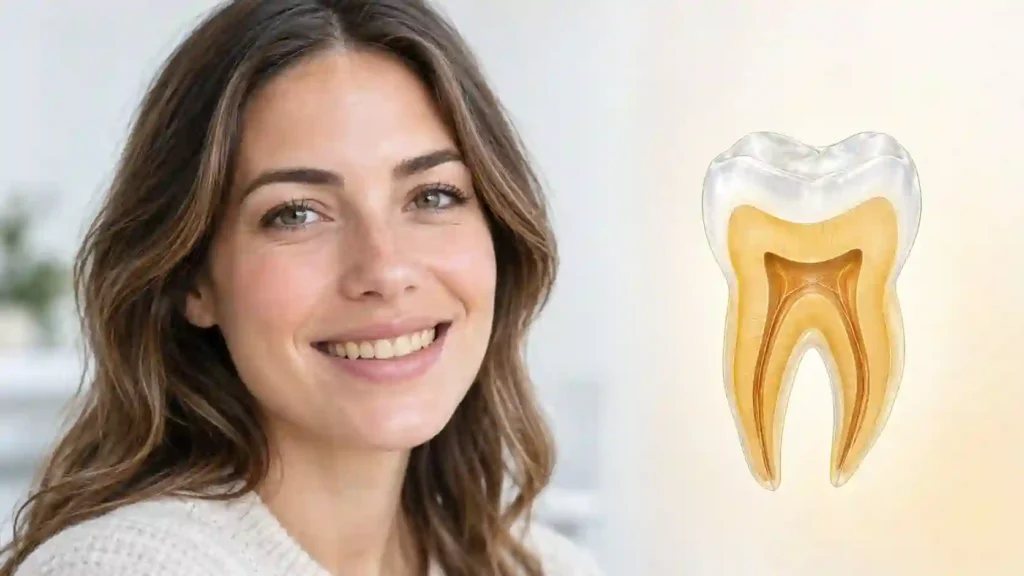
Here is the biology in plain terms. Your tooth has an outer shell called enamel, which is translucent and bluish-white. Under it sits dentin, which is naturally yellow. Thick, healthy enamel masks the dentin. Thin, worn enamel stops masking it. What you then see is not a stain you can scrub off. It is the inside of your own tooth showing through a thinner window.
That single distinction changes everything about treatment. Scrubbing, polishing, and bleaching target the surface. Remineralisation, bonding, and veneers address structure. People who buy a fourth box of whitening strips for a structural problem keep buying the wrong tool for the job.
What Causes a Brasssmile?
The cause usually falls into one of two buckets, and many people have a foot in both.
Stain sitting on the surface (extrinsic)
- Coffee, black tea, red wine, cola, curry, turmeric, soy sauce, and berry sauces carry strong colour pigments called chromogens.
- Tobacco packs a double hit: tar stains dark, and nicotine turns yellow once it meets oxygen.
- Poor plaque control leaves a film that grabs and holds pigment.
- Some mouthwashes, such as chlorhexidine, stain heavily with longer use.
- Iron supplements and certain liquid medicines leave a dark film on the tongue and teeth.
Colour or structure inside the tooth (intrinsic)
- Enamel wears down from aggressive brushing, grinding, and acidic drinks, so dentin reads through.
- Dentin thickens and darkens with age, which is why a smile that looked cool-white at 20 often warms by 45.
- Tetracycline antibiotics taken while teeth form can band adult teeth with grey or yellow.
- Too much fluoride during childhood can cause fluorosis, showing as chalky white flecks or brown mottling.
- A knock to a tooth makes it lay down extra dentin, which darkens the tooth from within.
- Genetics sets your baseline enamel thickness and dentin shade before you do anything at all.
Acid deserves its own note. When bacteria feed on sugar, they make acid that pulls minerals out of enamel. The National Institute of Dental and Craniofacial Research (NIDCR), part of the US National Institutes of Health, describes this as the first stage of tooth decay and confirms that fluoride and saliva can push minerals back in while the damage is still early. Catch it there and you reverse it. Miss it and the mineral loss becomes permanent structure loss.
Brasssmile vs Yellow Teeth vs Grey Teeth: What Are You Looking At?
Shade tells you more than most people realise. Use this table in front of a bathroom mirror with the overhead light off and daylight from a window.
| What you see | Usual driver | Is it a brasssmile? | Whitening response | Sensible first step |
|---|---|---|---|---|
| Even yellow cast, worse near the gum line | Surface stain from food, drink, tobacco | No, this is straightforward staining | Strong | Hygiene clean, then whitening |
| Warm gold cast, teeth look slightly see-through at the edges | Enamel thinning with dentin showing through | Yes, classic brasssmile | Partial, often disappointing | Dentist assessment for enamel wear |
| Dull gold cast that photographs worse than it looks in person | Mix of surface stain and thinning | Yes, mixed brasssmile | Good on the stain part only | Treat stain first, then reassess |
| Chalky white patches or brown flecks | Fluorosis or early mineral loss | Sometimes | Poor | Fluoride, microabrasion, or resin infiltration |
| Grey or blue-grey banding | Tetracycline, trauma, or a dying nerve | No, different problem | Poor to none | Dentist examination, often urgent |
| One single dark tooth among normal neighbours | Trauma or nerve death | No | None | See a dentist promptly |
| Yellowing only along old filling or crown edges | Ageing restorative material | No | None, material will not bleach | Replace or polish the restoration |
The American Dental Association (ADA) states plainly that whitening works on both extrinsic and intrinsic staining, but only on natural teeth. Whitening will not change the colour of crowns, veneers, or fillings. That fact alone explains a large share of failed home whitening attempts.
Who Gets a Brasssmile?
Anyone with teeth can develop one, but certain patterns show up again and again.
| Risk factor | How it produces the brassy cast | What to do about it |
|---|---|---|
| Daily coffee or tea, three or more cups | Constant chromogen exposure builds a pigment film | Rinse with water after, drink through a straw, keep a 30-minute gap before brushing |
| Red wine most evenings | Acid plus deep pigment, which etches then stains | Alternate with water, finish with a plain water rinse |
| Acidic drinks: fizzy drinks, sports drinks, citrus, kombucha | Acid softens enamel so pigment sinks in faster | Limit to mealtimes, use a straw, never swish |
| Hard or aggressive brushing | Abrasion strips enamel faster than it wears naturally | Switch to a soft brush, light pressure, small circles |
| Teeth grinding or clenching | Flattens enamel and thins the biting edges | Ask your dentist about a night guard |
| Acid reflux, frequent vomiting, or eating disorders | Stomach acid bathes the tongue-side surfaces | Treat the medical cause first, then restore |
| Dry mouth from medication, mouth breathing, or radiotherapy | Less saliva means less natural repair and more stain | Sip water, use xylitol gum, ask about saliva substitutes |
| Smoking or vaping with tobacco | Tar and nicotine stain, and heat dries the mouth | Stop, and ask your dentist about stain removal timing |
| Age over 40 | Dentin thickens and darkens on its own | Adjust expectations, then treat stain on top |
| A whitening habit with no gaps | Over-bleaching leaves enamel more permeable and translucent | Cycle off, remineralise, then restart with supervision |
The World Health Organization reports that oral diseases affect nearly 3.7 billion people worldwide, and that untreated tooth decay in permanent teeth ranks as the most common health condition in the Global Burden of Disease 2021 study. A cosmetic shade concern sits at the mild end of that picture, but the same daily habits drive both.
Is a Brasssmile Bad for Your Teeth?
A brasssmile is usually a cosmetic signal, not a disease. The colour itself does not hurt you. The process behind it sometimes does, and that is what deserves your attention.
Warm discolouration becomes a health matter when it travels with other signs. Book a dental appointment rather than a whitening session if you notice any of these:
- Teeth that zing with cold air, cold drinks, or sweetness, and the feeling lingers.
- Chalky white patches near the gum line, which signal mineral loss.
- Edges of front teeth that look glassy, see-through, or chip easily.
- Flat, shiny wear facets on the biting surfaces.
- Rough or catchable spots you can feel with your tongue.
- One tooth that has darkened on its own, especially after a knock.
- Bleeding gums when you brush or floss.
WHO names four shared risk drivers behind oral disease: sugar, tobacco, alcohol, and poor hygiene. Cut those, and you improve both the health and the shade of your smile at the same time. That is the honest reason prevention outperforms correction.
How Do Dentists Diagnose Brasssmile?
One question is addressed by the rapid diagnosis: how much of your color is on the tooth and how much is inside?
Expect five steps at a good appointment.
- Shade matching. Your dentist holds a shade guide against your teeth under standard lighting and records where you sit today. That record becomes your before-and-after evidence.
- Daylight photos. Surgery lighting flatters teeth. A phone photo by a window shows the warm cast the way the world sees it.
- Transillumination. A small light placed behind the tooth reveals cracks, translucent edges, and how much light passes through thinning enamel.
- Surface and structure check. Your dentist looks for wear facets, cupping on the biting surfaces, exposed dentin at the necks of teeth, and roughness along old restorations.
- History and imaging. Diet, medication, grinding, reflux, and past whitening all matter. X-rays rule out decay hiding underneath the colour.
Arrive with three questions written down: What is driving my discolouration, stain or structure? Which treatment matches that driver, and what will it not fix? How long should the result last, and what maintenance does it need? A dentist who answers all three in specific terms is worth keeping.
Do Whitening Strips, Charcoal, or Oil Pulling Fix Brasssmile?
Strips fix part of it. Charcoal and oil pulling fix none of it. That is not an opinion, it is where the evidence sits.
Whitening products work because of peroxide. Hydrogen peroxide and carbamide peroxide break stain molecules into smaller pieces, so the colour reads lighter. The ADA lists in-office bleaching, dentist-supplied take-home trays, and over-the-counter products as the three delivery routes, and names temporary tooth sensitivity and gum inflammation as the most common side effects.
Peroxide moves through enamel, so it handles surface stain and some intrinsic colour. What it cannot do is add thickness back to a thinned tooth. If your brasssmile comes from wear, bleaching lightens the dentin you can see and stops there. Push harder with more frequent or stronger products and you risk the opposite of what you want: the ADA news service reports that overuse of over-the-counter whiteners can damage enamel and gums, cause sensitivity, and lead to translucent teeth that reveal the yellow inner layer 2.
On the alternatives, be sceptical. The ADA’s evidence summary states there is insufficient evidence that charcoal toothpastes, powders, or mouthwashes whiten teeth safely and effectively, and no documented whitening benefit from oil pulling, which also carries reported harms. Save your money.
The practical rule: match the product to the problem. Use peroxide for stain. Use remineralisation and protective work for structure. If you buy over-the-counter, look for the ADA Seal of Acceptance, which means the product has been tested for safety and effectiveness.
Which Brasssmile Treatments Actually Work?
Treatment choice follows diagnosis. This table covers what each option does well, what it cannot do, and how long results typically hold.
| Treatment | Best for | What it cannot do | Typical course | How long it lasts |
|---|---|---|---|---|
| Professional hygiene clean | Removing surface stain, tartar, and plaque film | Change colour inside the tooth | One visit, 30 to 60 minutes | 3 to 6 months, depending on habits |
| In-office bleaching | Fast, supervised brightening of natural teeth | Whiten crowns, veneers, or fillings; rebuild enamel | One visit, 60 to 90 minutes | 1 to 3 years with good maintenance |
| Dentist-supplied take-home trays | Controlled, gradual whitening with custom fit | Correct structural thinning | 1 to 3 weeks of daily wear | 1 to 3 years, easiest to top up |
| Over-the-counter strips or gels | Mild surface staining on a tight budget | Fix grey tones, restorations, or thinning enamel | 7 to 14 days | 3 to 6 months |
| Fluoride varnish and remineralisation | Early mineral loss, sensitivity, strengthening thin enamel | Remove established stain | Applied at the clinic, repeat quarterly | Ongoing, needs repeats |
| Microabrasion | Shallow white, brown, or mottled surface defects | Treat deep colour or general warmth | One to three visits | Long-lasting, years |
| Resin infiltration | Chalky white fluorosis patches and early white spot lesions | Whiten the whole tooth | One visit | Several years |
| Composite bonding | Covering warm colour, chips, and gaps on a few teeth | Match porcelain for stain resistance | One visit per tooth | 4 to 8 years before repair |
| Porcelain veneers | Full smile redesign, severe or stubborn discolouration | Be reversed, once enamel is removed | Two to three visits | 10 to 15 years with care |
| Crowns | A single badly discoloured, broken, or root-filled tooth | Brighten a whole smile cost-effectively | Two visits | 10 to 15 years or longer |
Two patterns separate satisfied patients from disappointed ones. First, people who clean and whiten before they restore get better colour matches, because you match a veneer to a clean tooth, not to a stained one. Second, people who fix the driver keep the result. Bonding over an unmanaged grinding habit chips. Veneers over uncontrolled reflux stain at the margins.
Daily Habits That Keep a Brasssmile Away
Whitening buys a result. Habits keep it. These nine steps cost almost nothing and protect enamel you cannot replace.
- Brush twice a day with fluoride toothpaste. Fluoride is the one ingredient with consistent evidence for repairing early mineral loss. To ensure that the fluoride remains on your teeth, spit after brushing and do not rinse.
- Wait 30 minutes after anything acidic. Brushing straight after orange juice, wine, or fizzy drinks scrubs softened enamel. Drink your water, wait, then brush.
- Use gentle pressure and a soft brush instead. Scrubbing harder wears enamel faster. If your brush head splays within a month, you are pressing too hard. An electric brush with a pressure sensor fixes this for most people.
- Clean between your teeth every day. Floss or interdental brushes remove the film that grabs pigment, and they reach the corners where staining starts.
- After drinking wine, tea, or coffee, rinse with simple water. Ten seconds in the bathroom sink removes a surprising amount of pigment before it sets.
- Use a straw for cold dark drinks. The straw sends liquid past your front teeth instead of over them.
- Cut the frequency of sugar, not just the amount. Every sugary hit starts an acid attack lasting about 20 minutes. Ten hits a day means ten attacks. One dessert with a meal means one.
- Chew sugar-free gum with xylitol after meals. Saliva is your natural repair fluid, and chewing raises its flow.
- Book a hygiene visit every six months, or as your dentist advises. Professional cleaning removes what your brush cannot, and it catches wear early enough to act on.
NIDCR sets out the same core prevention set: fluoride, twice-daily brushing, cleaning between teeth, smart food choices, no tobacco, and regular check-ups 1. Follow it and most brasssmile treatments hold their colour two to three times longer.
Brasssmile in Children and Teens
Parents notice a warm cast in a child’s new permanent teeth and panic. In most cases, nothing is wrong. Adult teeth are naturally more yellow than the baby teeth they replace, so the contrast against a familiar milk-white smile looks dramatic. The front teeth look worst at ages seven to nine, and the colour usually evens out as the canines and back teeth come through.
Four childhood causes do need a dentist’s eye. Fluorosis shows as chalky white flecks or brown mottling and comes from swallowing too much fluoride while teeth form, so supervise brushing and use a pea-sized amount of paste. Tetracycline antibiotics taken during tooth development can band adult teeth permanently. A knock to a baby tooth can discolour the adult tooth underneath. Poor brushing and frequent sugar produce the same white-spot mineral loss seen in adults, and it is reversible at that stage.
Three rules keep children safe: brush with fluoride toothpaste twice a day from the first tooth, supervise until about age seven, and ask your dentist about fluoride varnish and fissure sealants on the permanent back teeth. Never bleach a child’s teeth with over-the-counter products. Developing teeth and pulps are more vulnerable, and the colour concern usually resolves on its own.
Brasssmile Com: Why the Same Name Points to Different Sites
Type brasssmile com into a search box and you will meet several unrelated websites wearing the same name. That confuses people, and confusion is how bad advice spreads. This section explains what is going on so you can tell the difference.
“Brasssmile” is a descriptive phrase before it is a brand. Any site can adopt it, and several have. Some publish dental and smile-care content. Others publish general lifestyle, business, or home décor articles that have nothing to do with teeth. A memorable name proves nothing on its own. It does not make a site a dental clinic, does not make a product clinically tested, and does not make a treatment right for you.
Here is what the main search variants actually mean:
| Search term | What the person usually wants | How to check what you found |
|---|---|---|
| brasssmile | A definition of the condition and its causes | Look for a plain definition in the first two paragraphs |
| brasssmile com | A specific website they half-remember | Check the domain in the address bar, not just the page title |
| brasssmile org | An organisation or nonprofit behind the name | Open the About page and look for a real entity and contact |
| brass smile teeth | Why their teeth look gold or dull | Look for a dentist-reviewed page with named sources |
| is brasssmile legit | Reassurance before trusting the advice | Look for author names, dates, and primary citations |
BrassSmiles.org publishes smile-care education only. We are an editorial resource, not a dental clinic. We do not diagnose, we do not treat, and we do not take payment to recommend products. Anything you read here should inform a conversation with your own dentist, never replace one.
How to Check Any Brasssmile Site Before You Trust It
Health advice deserves a ten-second credibility test. Run this checklist on every smile-care page you read, including ours.
- Named author with relevant background. “Admin” and “Team” tell you nothing. Look for a person, a role, and something you can verify.
- A review line from a qualified clinician. Dental content should carry a dentist, hygienist, or therapist reviewer with stated credentials.
- A visible publish or update date. Dental guidance moves. A page without a date may be years stale.
- Citations to primary sources. Government bodies, national dental associations, and peer-reviewed journals beat blog-to-blog referencing every time.
- Honest limits. Trustworthy pages say what a treatment cannot do. Pages that promise miracles in seven days are selling, not informing.
- A working contact route and a real About page. Anonymous health sites have no reason to be accountable.
- No pressure selling. Urgency, countdown timers, and “one weird trick” are purchase triggers, not health guidance.
- Balanced risk information. Real treatments carry real side effects. A page listing none is hiding something.
Apply that list and most low-quality smile content filters itself out in under a minute.
Your 30-Day Brasssmile Action Plan
Reading helps. Doing changes your smile. Here is a month that produces visible movement and a clear diagnosis.
Week 1: Establish your baseline. Photograph your teeth in daylight by a window, front on, lips retracted, same spot and time each week. Stop all whitening products so your dentist sees your true shade. Book a check-up and hygiene appointment.
Week 2: Fix the inputs. Use fluoride toothpaste and a gentle brush instead. Move acidic drinks to mealtimes and drink them through a straw. Add a plain water rinse after coffee, tea, and wine. Start flossing or using interdental brushes daily.
Week 3: Get the diagnosis. Attend your appointment and ask the three questions from the diagnosis section. Write the answers down. Ask specifically whether your discolouration is mostly stain, mostly structure, or mixed.
Week 4: Treat the driver, not the mirror. Start the treatment that matches your answer. Surface stain responds to hygiene and whitening. Structure responds to fluoride, remineralisation, bonding, or veneers. Set a maintenance date before you leave the clinic.
Repeat the daylight photo at day 30. Most people see a real shift, and the photo ends the guesswork for good.
Brasssmile FAQs
What does brasssmile mean?
A brasssmile describes teeth with a warm, golden, or dull cast rather than a flat yellow tone. The name comes from hair colour, where brassy means the orange-gold tone that appears as pigment fades. In teeth, the brasssmile look usually means thinned enamel is letting the yellow dentin layer beneath show through, often with surface stain on top.
Can you fix a brasssmile at home?
You can fix the stain part of a brasssmile at home with fluoride toothpaste, good technique, and peroxide products carrying the ADA Seal of Acceptance. You cannot rebuild thinned enamel at home. If your brasssmile comes from enamel wear or dentin showing through, home products give partial results and you need a dentist’s assessment.
Why does my brasssmile look worse in photos?
Cameras and flash flatten the light that normally bounces through translucent enamel, so the warm dentin underneath reads stronger on screen than in the mirror. Daylight photographs the brasssmile look most accurately. If your teeth look fine indoors but gold in photos, take that photo to your dentist as evidence.
How long does brasssmile treatment last?
Results depend on which treatment matched your cause. Professional cleaning holds three to six months. In-office or take-home whitening holds one to three years with good habits. Bonding lasts four to eight years, and porcelain veneers last ten to fifteen. Daily coffee, tobacco, and grinding cut every one of those numbers.
Is brasssmile permanent?
No, a brasssmile is treatable in almost every case. Surface stain responds to cleaning and whitening. Structural warmth responds to bonding, veneers, or crowns when the case calls for it. What is permanent is lost enamel, because enamel does not regenerate, which is why prevention and early action matter more than correction later.
Is brasssmile com a dental clinic?
No. Brasssmile com is a search phrase that points to several different websites using the same name, and none of them treat patients through a search result. BrassSmiles.org is an educational resource, not a clinic. Always check the About page, author credentials, and cited sources, and take treatment decisions to a qualified dentist.
Time to Do Something About Your Brasssmile
You now know the thing most people never find out. A brasssmile is not a cleaning failure, and buying another whitening kit treats the wrong layer of the tooth. Name your driver first, then pick the tool that matches it. That single decision saves money, protects enamel, and produces colour that actually holds.
Start today, and keep it small. Take one daylight photo of your smile. Book the check-up you have been postponing. Switch to a soft brush and fluoride toothpaste tonight. Three actions, twenty minutes, and you have replaced guesswork with a plan you can measure.
Your smile already tells a story. Make it the one you meant to tell. Have a question your dentist has not answered clearly? Send it to the BrassSmiles.org editorial team, and we will point you to the evidence.
Share this guide with anyone still buying whitening strips that do not work.