Which Fix und Foxi Figuren Should Every Fan Know?
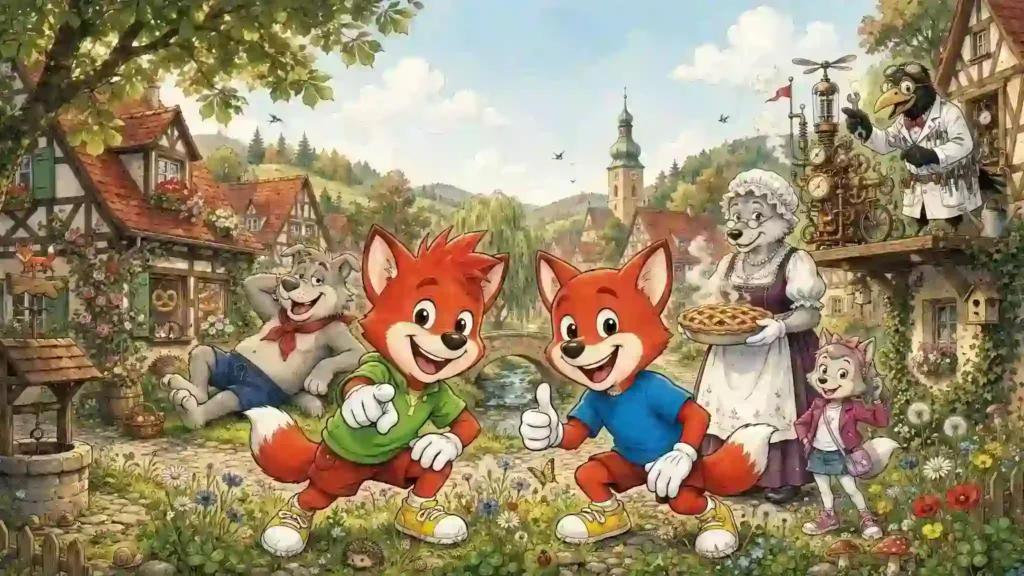
The Fix und Foxi Figuren turn a small German comic town into a lively world of clever plans, comic mishaps and memorable personalities. The fox twins Fix and Foxi may lead the stories, but their friends and relatives make the series feel complete: Lupo brings appetite and mischief, Oma Eusebia guards her cakes, and Professor Knox invents trouble as often as he solves it. This guide introduces the best-known characters, explains how they fit together and offers practical tips for readers and collectors.
What is Fix und Foxi?
Fix und Foxi is a German comic franchise created by publisher and cartoonist Rolf Kauka. The title centers on two young foxes and a wider community of animal characters. The stories mix everyday situations with slapstick, misunderstandings, inventions, family arguments and adventures.
The characters first appeared in the early 1950s in Kauka publications. The magazine soon adopted the twins’ names, and the comic world expanded over time. Different artists and editors contributed to the series across its long publishing history, so character designs, details and story styles can vary between periods and editions.
Readers often search for Fix und Foxi Figuren to identify a character, learn the family connections or find a starting point for reading. The quick reference below provides a useful overview before the detailed profiles.
Fix und Foxi Figuren at a glance
| Character | Species | Main role | Recognizable traits | Story function |
|---|---|---|---|---|
| Fix | Fox | One of the twin leads | Quick-thinking, energetic and practical | Often drives a plan forward |
| Foxi | Fox | One of the twin leads | Curious, good-natured and inventive | Helps turn problems into adventures |
| Lupo | Wolf | The twins’ comic companion and foil | Lazy, hungry, self-interested but charming | Creates comic complications |
| Oma Eusebia | Wolf | Lupo and Lupinchen’s grandmother | Proud baker, thrifty and firm | Sets boundaries and fuels cake-related plots |
| Lupinchen | Wolf | Eusebia’s granddaughter and Lupo’s relative | Independent, lively and interested in modern culture | Adds a youthful perspective |
| Uncle Fax | Fox | The twins’ older relative and guardian figure | Strict, orderly and fond of collecting | Represents rules and household authority |
| Professor Knox | Raven | Inventor and eccentric scientist | Brilliant, distracted and experimental | Starts invention-driven adventures |
| Pauli | Mole | Lead of a related story strand | Curious, resourceful and family-minded | Opens a separate neighborhood and family world |
| Hops and Stops | Hare and hedgehog | Supporting adventure duo | Contrasting temperaments and comic teamwork | Bring variety to magazine stories |
The table describes broad, familiar character roles, not a fixed rule for every story. Long-running comics evolve, and contributors sometimes emphasize different sides of a character.
Who are Fix and Foxi?
Fix and Foxi are the twin foxes at the heart of the franchise. Their shared adventures show how two close companions can approach the same problem in different ways. They are young, curious and generally well-intentioned, which makes them easy guides for readers entering the comic world.
The twins are often grouped together, but their value as characters lies in their teamwork. A plan may start with one of them noticing a problem while the other tests an idea, asks a question or reacts to an unexpected turn. Their bond provides continuity as the surrounding cast and story settings change.
Their fox identity also connects them to older European animal-story traditions, where foxes often stand for wit and adaptability. Kauka’s comics recast that familiar association in a modern, humorous setting rather than simply retelling a traditional fable. The result is a pair designed for comic situations, not solemn moral lessons.
For new readers, the twins are the best starting point. Follow how they respond to a challenge, then notice how Lupo, Eusebia, Fax or Knox shifts the story. This is a simple way to understand why the Fix und Foxi Figuren work as an ensemble rather than as a collection of isolated cartoon designs.
Why is Lupo such a fan favorite?
Lupo is a wolf whose appetite for comfort, food and easy success repeatedly gets him into trouble. He enjoys relaxing and is especially associated with Oma Eusebia’s baking. His schemes can be selfish, but his exaggerated confidence and comic failures make him entertaining rather than frightening.
In a typical Lupo-centered situation, he spots a shortcut: a way to get a treat without waiting, avoid a chore or gain an advantage without much effort. The plan looks perfect to him. Then a detail he ignored catches up, and his attempt to escape the consequences creates a bigger mess.
That pattern gives Lupo a role distinct from the fox twins. Fix and Foxi often move a story toward a solution; Lupo can derail it, complicate it or become the source of the problem. He also gives the cast a recognizable comic contrast: energy and planning meet laziness and appetite.
Lupo is not simply a villain. His flaws are pushed to cartoon extremes, and many stories let his charm, frustration or bad luck show through. That mix explains his lasting appeal: readers can laugh at his schemes while still enjoying his presence in the group.
Who is Oma Eusebia?
Oma Eusebia is Lupo and Lupinchen’s grandmother, and a formidable presence in the neighborhood. She is widely associated with cakes and pastries, careful spending and a sharp response when someone takes advantage of her generosity. Her baking is more than a character detail; it often supplies the temptation that launches a comic plot.
Eusebia’s authority gives stories a dependable counterweight to Lupo’s impulsiveness. She knows his habits, protects what matters to her and does not accept every excuse. Her sternness can produce conflict, but it also comes from a clear sense of fairness and self-respect.
She is not only a scolding grandmother. Her practical skills and strong opinions make her an active participant in the action. Depending on the story, she can outwit Lupo, challenge the younger characters or surprise them with her resourcefulness. This makes her one of the most memorable supporting Fix und Foxi Figuren.
What makes Lupinchen different?
Lupinchen is Eusebia’s granddaughter and Lupo’s young relative. She brings a lively, youthful perspective to the cast and is often associated with interests such as pop culture, fashion and music. Like the other characters, her exact portrayal can vary between stories and publication periods.
Her presence broadens the social world of the comics. Instead of letting the stories revolve only around the twins and Lupo, Lupinchen adds another point of view and a different kind of confidence. She can challenge an older character’s assumptions, take initiative or act as a mediator when family members clash.
When comparing older and newer editions, readers may notice changes in how Lupinchen is drawn or written. Those differences reflect changing artistic styles and ideas about youth culture. They are part of the series’ publishing history, not necessarily evidence that one version is the only valid one.
What role does Uncle Fax play?
Uncle Fax is an older fox who acts as a guardian and household authority figure for Fix and Foxi in many stories. He is associated with order, rules and a serious approach to everyday matters. His interests, including collecting, can also become a source of comic complications.
Fax and the twins create a familiar generational contrast. He expects discipline and sensible behavior; the young characters want freedom, novelty or a chance to act on their own. That tension lets a story explore responsibility without turning into a lecture.
Fax’s personality is not limited to strictness. His habits and confidence can make him just as vulnerable to a ridiculous situation as the younger cast. When the plot exposes a blind spot or puts his authority to the test, he becomes part of the joke rather than merely the person enforcing rules.
Why does Professor Knox invent so much trouble?
Professor Knox is a raven and an eccentric inventor. He brings machines, experiments and scientific ideas into a comic universe that otherwise often centers on household disputes and neighborhood life. His inventions can promise an elegant solution, but an unexpected result frequently sends the story in a new direction.
Knox’s role reflects a familiar comedy engine: clever technology meets unpredictable real life. A device might work in a way nobody intended, or a minor flaw might turn a simple demonstration into a chaotic adventure. The humor usually comes from the gap between the inventor’s confidence and the consequences of his creation.
He also adds variety to the cast. Not every problem has to begin with Lupo’s hunger or the twins’ plans. Knox lets the comics explore curiosity, experimentation and the comic risks of trying to control everything. His stories are especially useful for readers who enjoy gadget-based humor.
Who is Pauli, and how does his world connect?
Pauli is a mole who became a major character in Kauka’s wider comic universe. He appeared in stories associated with the Fix und Foxi magazine, but his adventures form a distinct strand rather than simply duplicating the twins’ stories. His family and home life help create a separate setting with its own relationships and problems.
Pauli’s early characterization drew on familiar mole traits, including digging and poor eyesight. Over time, artists developed him into a fuller character. His stories feature relatives and a community of his own, which makes them a useful entry point for readers interested in more than the central fox duo.
The wider magazine also published other recurring characters and series. Hops and Stops, Mischa, Tom and Biber, and smaller comic figures helped give issues variety. Their presence matters to the franchise’s history, even though not every reader will encounter them in the same collection or edition.
How are the characters related?
The relationships are easiest to understand by separating family ties from friendships and story roles. Fix and Foxi are the twin fox leads. Uncle Fax is their older relative and guardian figure. Lupo and Lupinchen belong to Eusebia’s wolf family, with Eusebia as their grandmother.
The foxes and wolves do not share one household family tree simply because they appear together. They are part of the same comic community. Their interactions work because each character brings habits and goals that can collide: the twins may want to solve a problem, Lupo may see a chance for a snack, and Eusebia may be guarding the cake.
Professor Knox and Pauli sit outside that central family structure. Knox is an inventor who crosses paths with the ensemble, while Pauli leads a related story world. Understanding this distinction prevents a common mix-up: a character can belong to the broader franchise without being a direct relative of the title characters.
What makes the Fix und Foxi cast memorable?
Strong contrasts are the foundation of the Fix und Foxi Figuren. Fax stands for rules, Knox believes in creativity, Eusebia loves control and hard work, Lupo prefers shortcuts, and the twins signify cooperation and curiosity. Those traits create ready-made conflicts without requiring a complicated plot setup.
The cast also supports several kinds of comedy:
- Physical comedy: chases, falls, mishaps and exaggerated reactions.
- Character comedy: a familiar flaw leads someone into trouble.
- Family comedy: relatives disagree over rules, chores or shared space.
- Invention comedy: a machine produces a result nobody expected.
- Social comedy: characters misunderstand one another or compete for attention.
Because each figure has an identifiable role, a reader can understand a story quickly. At the same time, the combination of characters leaves room for new situations. The same cake, household rule or experiment can create a different outcome depending on who becomes involved.
How did the characters develop over time?
A comic series that runs across decades does not stay visually or editorially fixed. Artists change, printing formats change and publishers make new decisions about presentation. As a result, readers may find differences in proportions, clothing, dialogue, color and characterization between one era and another.
The franchise began in the 1950s under Rolf Kauka and expanded through magazines and related publications. Its history includes changing publishing arrangements and periods when the title appeared in different formats or returned after pauses. The main characters remained recognizable, but the creative teams and market context changed around them.
That long history is useful when reading or collecting. A reprint may preserve an older story while placing it beside newer material. A recent edition may modernize presentation or select stories from several periods. Check the publication details rather than assuming every book represents the same era or creative style.
A balanced reading of the series also recognizes its historical context. Older comics reflect the norms, jokes and social assumptions of their time. Readers can enjoy the craft and humor while noticing how later audiences may interpret particular scenes differently. Context makes discussion more informed, not less enjoyable.
Which Fix und Foxi tales are best for novices to start with?
There is no single required reading order for a largely episodic comic world. Most readers can begin with an accessible collection that clearly identifies its stories and publication details. The best first choice depends on whether you prefer the classic artwork, a broad retrospective or a particular supporting character.
Use these steps to choose:
- Pick a character focus. Start with Fix and Foxi for the central stories, Lupo for slapstick, Knox for inventions or Pauli for a related family-centered setting.
- Check the edition information. Look for the publisher, publication date, story credits and whether the book is a reprint or a new collection.
- Choose a format you will enjoy. A curated anthology offers variety; a chronological collection helps show artistic change; a character-focused volume gives more time with one lead.
- Read a sample if available. Art style, lettering and translation can vary, and a preview helps you decide whether the edition suits you.
- Keep expectations flexible. Different decades may use different humor and storytelling rhythms.
The easiest way to understand the Fix und Foxi Figuren is to read several kinds of story, not just one. Compare a twin-led adventure with a Lupo gag and an invention story. The contrasts reveal how the magazine balanced familiar personalities with different comic formats.
What should collectors check before buying?
Collectors should assess both the story content and the physical condition. A book’s value depends on factors such as edition, scarcity, demand, condition and completeness. No character or issue automatically guarantees a high resale price.
Before purchasing, check:
- Exact title and issue details: Similar cover designs can belong to different editions.
- Publication information: Confirm the publisher, date, language and format.
- Completeness: Check that all pages, inserts or supplements are present where relevant.
- Condition: Look for loose pages, writing, moisture marks, fading, tears and repaired spines.
- Reprint status: A reprint can be excellent for reading but is not the same collectible as an original issue.
- Provenance and seller description: Ask for clear photographs and a precise account of defects.
- Storage needs: Keep paper away from direct sunlight, dampness and large temperature swings.
If collecting for enjoyment, prioritize stories and art you genuinely want to revisit. If buying as an investment, research recent sales for the exact edition and condition. Treat price guides and seller claims as starting points, not guarantees.
How can parents and educators use these comics?
Comic pages give children a clear way to follow action, expression and cause and effect. A reader can infer what a character wants from the drawing before understanding every word. That makes older comics a useful prompt for shared reading, vocabulary practice and visual storytelling.
Adults can ask simple questions after a story: What did the character want? Which choice caused the problem? What could they try next time? These questions encourage comprehension without turning reading into a test. Children can also retell a scene, invent a different ending or draw a new gadget for Professor Knox.
For younger readers, select an edition with readable lettering and age-appropriate material. Older stories may include outdated language or ideas, so adults should be ready to explain the context when needed. A thoughtful conversation helps children distinguish between a character’s behavior and a model to copy.
Frequently asked questions about Fix und Foxi Figuren
Who created Fix and Foxi?
Rolf Kauka created the characters and the comic franchise. Different writers and artists helped develop the stories and visual style over the years.
Are Fix and Foxi brothers?
They are presented as twin foxes and are usually treated as brothers in English-language descriptions. Their twin relationship is central to the series.
Is Lupo a fox or a wolf?
Lupo is a wolf. He is a recurring comic character known for his appetite, laziness and schemes, especially in stories involving Oma Eusebia’s baking.
Who is Lupinchen?
Lupinchen is a young wolf and a member of Eusebia’s family. She adds an independent, youthful perspective to the supporting cast.
Is Pauli one of the main Fix and Foxi characters?
Pauli is an important character in Kauka’s wider comic world and appeared in the magazine, but he also has a distinct series and setting of his own.
Where should a new reader start?
Start with an accessible collection that identifies its publication details and includes the kind of stories you enjoy. A mixed anthology is a good way to meet the main cast before choosing a character-focused volume.
Explore the cast and find your favorite
The fox twins give the series its name, but the full cast is what makes each story feel different. Lupo’s shortcuts, Eusebia’s kitchen authority, Lupinchen’s energy, Fax’s rules and Knox’s experiments create a comic world with room for many kinds of readers. Pauli and the magazine’s other story strands make that world wider still.
Choose a character whose personality catches your attention, then read a few stories from different periods. Compare the artwork, notice how the cast changes the direction of a plot and share your favorite moment with another reader. That is the best way to make the Fix und Foxi Figuren more than names on a page: meet them in their stories and decide which one you want to follow next.