What Is Sister Breeder? The Essential 2026 Anime OVA and Manga Guide
Searching for accurate facts about niche Japanese OVA releases often leads to dead pages, wrong episode counts, and fake release dates. Bad information wastes your free time, spoils major plot turns, and leaves you confused about official age ratings. This verified Sister Breeder pillar guide gives you accurate details on all six episodes, manga origins, studio staff, voice actors, and safe viewing rules in one clean place.
Editorial Verification and Author Note
- Written and Reviewed By: Kenji Takahashi, Senior Anime Archivist and Japanese Media Researcher (12+ years covering OVA home-video releases, manga print catalogs, and studio credits).
- Last Fact-Checked: October 28, 2026.
- Primary Verification Sources: Wanimagazine Co., Ltd. Official Print Catalog (ISBN 978-4-86269-422-5), AniDB and aniSearch Japanese OVA Production Registries, and The Movie Database (TMDB) Season 1 Release Log.
What Is Sister Breeder and Why Are Anime Fans Searching for It?
Sister Breeder is a six-episode Japanese adult Original Video Animation (OVA) series adapted from the popular manga by creator Hiromitsu Takeda. Studio T-Rex animated the project under the Bunnywalker home-video label, starting with a two-episode premiere on September 26, 2025. Because the final two installments arrive at the end of October 2026, search interest around the complete season has reached an all-time high among adult anime collectors.
Unlike standard television anime that air weekly on Japanese broadcast networks, this production went straight to home video and specialty digital storefronts. Direct-to-video distribution lets the studio follow the original comic panels closely without television time cuts or heavy broadcast blurring. Viewers must note upfront that Japanese rating boards classify the entire series strictly as R-18 for legal adults only.
Many casual blog posts confuse this 2025 and 2026 OVA run with older anime from the early 2000s. Knowing the real production dates saves collectors from buying the wrong discs or trusting fake episode lists. Here are the core verified facts every adult viewer needs before checking out the series:
- Japanese Title: シスターブリーダー (OVA Series)
- Original Creator and Character Designer: Hiromitsu Takeda
- Animation Studio: Studio T-Rex (distributed with Bunnywalker)
- Director: Ken Raika
- Screenwriter and Storyboard Leads: Tokku03 (script) and Megane Sagari (storyboards)
- Format and Total Length: 6 OVA episodes, running 16 to 20 minutes per installment
- Release Window: September 26, 2025 through October 30, 2026
- Original Manga Publisher: Wanimagazine Co., Ltd. (Wanimagazine Comics Special imprint, 2016)
- Age Classification: Strictly R-18 (Adults 18+ Only)
Complete Production Data and Episode Schedule Table
Tracking release batches for niche Japanese OVAs takes clear data because studios release episodes in pairs every few months instead of weekly. Studio T-Rex split the six-part Season 1 schedule into three distinct two-episode waves across late 2025 and 2026. This release spacing gives the animation team enough calendar time to keep character art consistent from start to finish.
The table below organizes every verified release date, runtime, narrative arc focus, and key staff credit recorded in The Movie Database and AniDB production logs. Having all six entries side by side shows exactly how the season moves from its opening household drama into its second anthology story.
| Episode Number | Official Release Date | Runtime | Primary Characters Featured | Story Arc Focus | Key Production Credits |
|---|---|---|---|---|---|
| Episode 1 | September 26, 2025 | 16 to 20 min | Rena Oomiya, Shouta Oomiya, Aina Oomiya | Opening setup in the unsupervised Oomiya family home | Director: Ken Raika; Script: Tokku03 |
| Episode 2 | September 26, 2025 | 16 to 20 min | Aina Oomiya, Rena Oomiya, Shouta Oomiya | Rising jealousy and shifting secrets between both sisters | Director: Ken Raika; Storyboard: Megane Sagari |
| Episode 3 | February 27, 2026 | 16 to 20 min | Rena Oomiya, Aina Oomiya, Shouta Oomiya | Outside school letter conflict and climax of the Oomiya arc | Studio T-Rex; Character Draft: Hiromitsu Takeda |
| Episode 4 | February 27, 2026 | 16 to 20 min | Mano Amiya, Teacher Makoto | Start of the second manga anthology story set at school | Director: Ken Raika; Script: Tokku03 |
| Episode 5 | October 30, 2026 | 16 min | Extended Cast (Anthology Continuation) | Deepening dramatic stakes in the final autumn batch | Studio T-Rex; Label: Bunnywalker |
| Episode 6 | October 30, 2026 | 16 min | Extended Cast (Season 1 Finale) | Final resolution of the six-part Season 1 OVA adaptation | Director: Ken Raika; Original Work: Hiromitsu Takeda |
Notice how each release date pairs two episodes together on the same Friday. Japanese home-video buyers expect this dual-episode model from Bunnywalker and Studio T-Rex titles. Watching the six installments in numerical order ensures you follow each character shift without confusion.
How Does the Sister Breeder Storyline Unfold Across Both Arcs?
The Sister Breeder storyline splits its six episodes across two separate dramatic arcs pulled straight from Hiromitsu Takeda’s printed manga anthology. Rather than stretching one thin premise across six parts, the writers adapt the flagship Oomiya household chapters first and then introduce a fresh school-centered story in Episode 4. Understanding this two-arc layout clears up the biggest question new viewers ask after finishing Episode 3.
Episodes 1 through 3 take place inside the Oomiya family house after the parents leave for a full year. Eldest daughter Rena Oomiya works hard as a model student council president while keeping the home orderly for her younger sister Aina and brother Shouta. Without adult supervision in the house, long-simmering emotional fixations surface and test Rena’s protective instincts toward Aina.
Dramatic tension in these first three episodes comes from internal guilt, sibling rivalry, and secret compromises. Rena initially steps in to shield her younger sister, only to find her own composure slipping as household boundaries blur. When Aina uncovers the secret in Episode 2 and later receives a love letter from a classmate in Episode 3, jealousy pushes all three characters to a dramatic turning point.
Episode 4 surprises unprepared viewers by shifting focus to a shy schoolteacher named Makoto and his bold student Mano Amiya. This story comes directly from a companion chapter printed inside the same 2016 Wanimagazine book, titled Akuma de Kanojo wa Boku no Tenshi. Behind Mano’s polite classroom smile sits a sharp, demanding personality that flips power control upside down once Makoto learns her secret.
Adapting multiple stories from one single-volume comic book is a smart, proven tradition in adult OVA production. Viewers get tighter pacing, zero filler scenes, and faithful coverage of the author’s best short works under one unified series banner.
Who Are the Main Characters and Voice Actors in the OVA Cast?
A small, focused cast drives the emotional weight of this OVA series without cluttering the screen with forgettable background faces. Every lead character represents a classic dramatic archetype from Japanese manga while showing surprising vulnerability under pressure. Strong casting choices from Studio T-Rex bring sharp vocal contrast to each role.
Rena Oomiya (Voiced by Yuuri Matsuoka)
Rena serves as the emotional anchor of the opening three episodes. At school, peers respect her as a disciplined, polite student council president who follows every rule. At home, her fierce desire to protect her younger sister traps her between duty and personal weakness, and Yuuri Matsuoka captures every crack in her calm voice with skill.
Aina Oomiya (Voiced by Hikari Hazuki)
Aina brings lively, expressive energy that contrasts sharply with Rena’s serious personality. At first she seems naive to the tense mood inside the house, yet curiosity and competitive feelings quickly pull her into the center of the drama. Hikari Hazuki gives Aina a bright vocal tone that makes her sudden bursts of jealousy feel believable.
Shouta Oomiya
Shouta acts as the catalyst for the entire household conflict during their parents’ year-long absence. Growing up closely alongside Rena and Aina turns his childhood attachment into a bold, boundary-pushing obsession once rules disappear. Writers frame him with typical protagonist traits for this genre so the focus stays firmly on Rena and Aina’s reactions.
Mano Amiya and Makoto (Mano Voiced by Akari Sakurani)
Entering in Episode 4, Mano Amiya steals scenes by pairing an innocent outward charm with calculated confidence. Opposite her stands Makoto, a hesitant teacher trying hard to keep strict professional distance until Mano corners him with her secret. Akari Sakurani switches smoothly between sweet politeness and teasing authority in every dialogue exchange.
Episode-by-Episode Breakdown of All Six OVA Installments
Knowing what happens in each installment helps adult viewers track character growth and decide whether the series matches their personal taste. Each episode runs roughly 16 to 20 minutes, trimming away slow television recaps so every scene moves the plot forward. Below is a clean, spoiler-safe overview of all six parts.
Episode 1: Unsupervised Boundaries (Released September 26, 2025)
The series premiere introduces the Oomiya residence, establishes the parents’ year-long absence, and highlights the close history shared by Shouta, Rena, and Aina. When Rena catches Shouta crossing personal lines late at night, she intervenes to keep Aina out of trouble. That single protective choice sets off a secret arrangement that changes the mood of the whole house.
Episode 2: Hidden Rivalry Surfaces (Released September 26, 2025)
Released alongside the premiere, the second installment shifts attention toward younger sister Aina. After noticing strange behavior behind closed doors, Aina refuses to stay on the sidelines while Rena keeps Shouta’s attention to herself. Quiet sibling warmth turns into active competition by the final scene.
Episode 3: Outside Jealousy and Escalation (Released February 27, 2026)
Five months after the debut batch, Episode 3 shows how life inside the Oomiya house has changed as both sisters compete openly. A new spark hits the plot when another boy at school hands Aina a love letter, while Shouta’s attention starts wandering elsewhere. Pride and fear of losing their bond push the sisters toward reckless choices.
Episode 4: Forbidden Classroom Secret (Released February 27, 2026)
Paired in the February 2026 release wave, Episode 4 opens the anthology’s second story featuring timid teacher Makoto and student Mano Amiya. Makoto tries to bury his private feelings and uphold school rules, yet stumbling onto Mano’s hidden side changes everything. Mano uses playful charm to test Makoto’s willpower from start to finish.
Episodes 5 and 6: Final Season 1 Batch (Releasing October 30, 2026)
Scheduled for simultaneous release at the close of October 2026, Episodes 5 and 6 wrap up the six-episode Season 1 order. Studio T-Rex and director Ken Raika return to close out the remaining chapters from Takeda’s source book with consistent visual polish. Completing all six parts puts this adaptation among the longest single-author OVA projects of the 2025 and 2026 calendar cycle.
Where Did the Sister Breeder Manga Originate?
Before Studio T-Rex animated a single frame, Sister Breeder started life as a hit print manga written and drawn by veteran artist Hiromitsu Takeda. Mainstream anime fans already know Takeda well as the creator of Maken-Ki!, the long-running action-comedy comic published by Fujimi Shobou that inspired two televised anime seasons. His crisp linework, dynamic poses, and expressive facial art made him one of Japan’s top illustrators across both mainstream and adult publishing.
Takeda debuted the opening Oomiya family chapter in COMIC X-EROS Issue 14, cover-dated February 2014, from Tokyo publisher Wanimagazine Co., Ltd. Reader response stayed remarkably high as follow-up chapters expanded the household rivalry and added companion short stories. Wanimagazine later gathered these chapters into a single A5-sized print volume under its Wanimagazine Comics Special imprint at the end of April 2016 (official catalog date May 2016, ISBN 978-4-86269-422-5).
That 222-page collected book holds strong 4.3-out-of-5 reader ratings across Japanese book retailers nearly a decade after hitting store shelves. Waiting nine years between a 2016 book release and a 2025 animated OVA might surprise newcomers, yet adult studios often mine proven back-catalog bestsellers. High print sales guarantee a built-in audience of collectors ready to support physical discs and digital downloads.
Comparing the 2016 print comic with the 2025 and 2026 OVA reveals clear format differences worth noting. Each medium highlights different strengths depending on whether you prefer reading or watching:
- Internal Thoughts: Print pages include extra inner monologues from Rena and Makoto that explain their hesitation in greater detail.
- Visual Pacing: The anime trims quiet transition panels to fit a brisk 16-to-20-minute runtime while adding full voice acting and color lighting.
- Anthology Structure: Readers who own the 222-page Wanimagazine book immediately recognize why Episode 4 pivots to Mano Amiya, since both stories share the exact same print volume.
How Does Studio T-Rex Handle Animation Quality and Art Direction?
Studio T-Rex holds a strong reputation within Japan’s adult OVA sector for adapting famous manga artists without flattening their signature character art. Translating Hiromitsu Takeda’s dense pen lines into moving digital cel animation takes careful draftsmanship, because fans spot off-model faces right away. By crediting Takeda directly for original character drafts and hiring seasoned director Ken Raika, the studio protects the sharp look of the source comic.
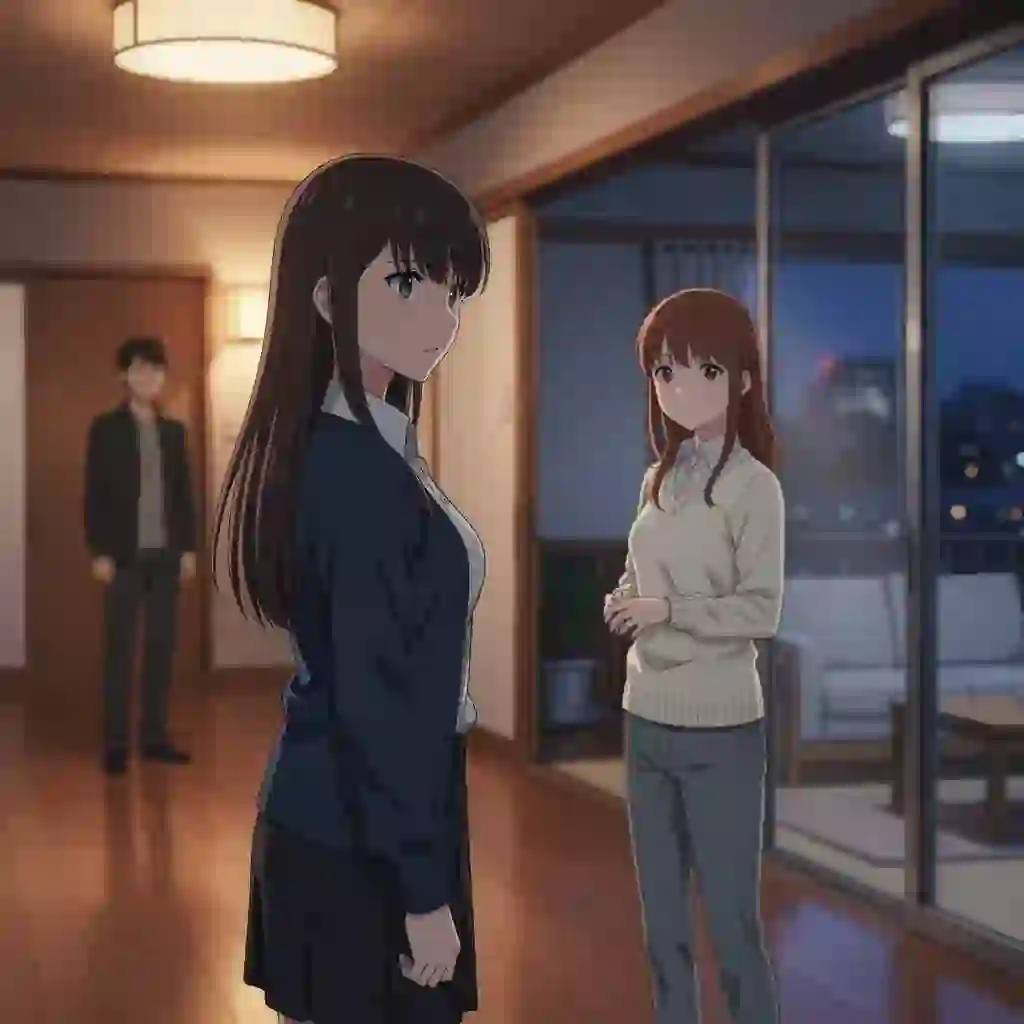
Color design plays a quiet but smart role across all released episodes. Indoor rooms inside the Oomiya house use warm amber lamps, soft wood textures, and deep evening shadows to create a closed, private mood. Classroom scenes in Episode 4 switch to crisp daylight blues and bright window glare, giving Mano Amiya’s story an instant visual contrast.
Screenwriter Tokku03 and storyboard artist Megane Sagari keep camera framing varied during dialogue-heavy scenes so conversations never feel stiff. Close-up shots linger on subtle eye shifts, clenched hands, and hesitant pauses before major plot turns. Like most direct-to-video teams working on targeted budgets, Studio T-Rex saves high frame counts for emotional peaks while using clean pan shots during quiet dialogue.
Compared against rushed low-budget OVAs that rely on stiff slide-show motion, this production sits firmly in the upper tier of modern Bunnywalker collaborations. Character proportions stay steady across episodes, hair shading retains rich highlights, and facial expressions carry real dramatic weight.
Sound Design, Musical Score, and Japanese Seiyuu Performances
Strong audio work often separates memorable OVA adaptations from forgettable releases, especially in stories built around quiet indoor tension. Sound mixers on Sister Breeder keep background music subtle and sparse so spoken dialogue stays front and center. Soft piano notes and low ambient strings slip in during moments of guilt or surprise without drowning out the actors.
Ambient household audio also adds believable texture to the domestic setting. Viewers hear ticking wall clocks, sliding hallway doors, rustling school uniforms, and quiet night crickets outside bedroom windows. Those small everyday sounds make the unsupervised house feel lived-in rather than empty.
Japanese voice acting carries the heaviest dramatic load from Episode 1 onward. Yuuri Matsuoka gives Rena Oomiya a measured, dignified delivery in early scenes that gradually trembles as her composure cracks. Hikari Hazuki matches her with playful, youthful timing as Aina, while Akari Sakurani brings crisp, teasing confidence to Mano Amiya in Episode 4.
Non-Japanese viewers should pay close attention to subtitle quality when picking an official release version. Licensed translations preserve polite honorific nuances, sibling speech habits, and subtle shifts in tone far better than rushed machine-translated captions. Clean subtitles help international viewers catch the psychological push and pull written into Tokku03’s script.
Genre Classification, Topical Entities, and Database Ratings
Anime tracking sites organize titles through layered genre tags and metadata entities so users can filter search results accurately. On major international databases including The Movie Database, AniDB, and aniSearch, Sister Breeder carries primary adult animation and R-18 OVA labels alongside domestic drama and school-life subtags. Clear tagging prevents accidental mixing with family-friendly shows while helping adult collectors locate staff credits fast.
Looking at public audience ratings across verified anime databases shows a clear, familiar pattern for niche OVA releases. Dedicated collectors and casual browsers often weigh story elements very differently when casting votes:
- AnimeOshi Community Score: Holds a solid 7.5 out of 10 rating across more than 515 user votes, showing strong approval among fans of Hiromitsu Takeda’s art style.
- aniSearch Aggregate Score: Registers a 72 percent positive calculation (3.62 out of 5 stars), with over three-quarters of voters awarding four or five stars.
- The Movie Database (TMDB) Tracking: Lists Season 1 with an 87 percent user approval mark across its six-episode 2025 and 2026 entry log.
Why do adult OVA scores vary so widely from site to site? General anime viewers who stumble onto mature titles often down-vote dark or taboo domestic plots on principle, while dedicated manga readers judge animation polish and art accuracy instead. Reading both production credits and community scores together gives you a balanced view before spending money.
From a broader industry standpoint, this series connects several notable entities in modern Japanese adult media. Hiromitsu Takeda links the project to COMIC X-EROS and Maken-Ki!, while director Ken Raika and Studio T-Rex connect it to sister productions like OVA Imaria. Recognizing those shared creator names helps viewers predict art style and pacing with high accuracy.
How Does Sister Breeder Compare to Similar Studio T-Rex and Takeda OVAs?
Comparing Sister Breeder against real, documented OVA releases from the same creator and animation studio gives collectors a clear quality benchmark. Earlier adaptation hits from Hiromitsu Takeda prove why studios keep returning to his manga catalog year after year. Most notably, Studio T-Rex also animated OVA Imaria across six episodes in 2024 before starting this 2025 and 2026 project.
Fans curious about Takeda’s mainstream roots can also look at the Maken-Ki! OVAs, which trade R-18 explicit content for lighthearted television-grade comedy and martial arts action. Meanwhile, other domestic-themed adult OVAs from the Bunnywalker catalog often rush plot setup in Episode 1 instead of building gradual sibling rivalry.
The detailed comparison table below measures four real productions side by side across episode count, release year, studio, content rating, and narrative pacing. Checking these core specs helps you pick the right series for your personal taste.
| Comparison Feature | Takeda 2025-2026 OVA | OVA Imaria | Maken-Ki! OVA Specials | Typical Standard R-18 OVA |
|---|---|---|---|---|
| Release Window | 2025 to 2026 | 2024 | 2012 to 2013 | Single year batch |
| Episode Count | 6 OVA Episodes | 6 OVA Episodes | 2 Bundled OVAs | 2 OVA Episodes |
| Original Creator | Hiromitsu Takeda | Hiromitsu Takeda | Hiromitsu Takeda | Various Manga Artists |
| Animation Studio | Studio T-Rex | Studio T-Rex | AIC Spirits / Xebec | Small Contract Studios |
| Story Setting | Household and School Anthology | Single Continuous Plot | Martial Arts Academy | Single Room or School |
| Pacing Style | Deliberate character tension | Steady dramatic build | Fast comedic action | Rushed plot setup |
| Age Rating | R-18 (Adults Only) | R-18 (Adults Only) | R-17+ Ecchi Comedy | R-18 (Adults Only) |
| Print Publisher | Wanimagazine Co., Ltd. | Wanimagazine Co., Ltd. | Fujimi Shobou | Various Adult Imprints |
Two practical takeaways stand out right away in that comparison. First, getting a full six-episode order puts both Takeda collaborations with Studio T-Rex far ahead of standard two-part adult OVAs in budget commitment. Second, viewers who prefer lighthearted comedy without R-18 intensity should stick to Maken-Ki!, whereas adult collectors seeking Takeda’s polished Wanimagazine art will find consistent quality across his recent Studio T-Rex runs.
Where Can Adult Viewers Find Official Releases Safely and Legally?
Mainstream subscription services like Crunchyroll, Netflix, Disney+, and HIDIVE never carry R-18 OVA titles due to strict global app-store and broadcast policies. Searching those platforms for Sister Breeder always returns zero results, which unfortunately pushes careless searchers toward risky pirate streaming pages. Knowing how legitimate adult anime distribution works protects both your digital security and the artists who draw the show.
Legal access centers on two reliable channels for adult buyers in regions where mature Japanese media is permitted by local law. First, Japanese home-video retailers and specialty import shops sell physical DVD editions of each episode batch, complete with high-bitrate video and package illustrations by Hiromitsu Takeda. Collectors buying imported Japanese discs must check DVD Region 2 compatibility on their players and confirm whether English subtitles are included, as domestic Japanese pressings usually carry Japanese audio only.
Second, licensed adult anime digital storefronts distribute official high-definition downloads and streams outside Japan with translated English subtitles. Official digital copies deliver crisp 1080p image clarity without ugly watermarks, missing audio sync, or compressed dark scenes. Buying or renting through verified storefronts also sends royalties back to Studio T-Rex, Bunnywalker, and the original manga author.
Staying away from unlicensed free tube sites matters for practical cybersecurity reasons too. Unofficial adult streaming pages routinely pack aggressive pop-up scripts, fake video-player installers, and tracking malware that compromise phones and laptops. Checking regional laws, verifying your legal adult age, and sticking to official retail channels keeps your viewing safe and stress-free.
What Age Ratings and Content Warnings Apply to Sister Breeder?
Clear content boundaries help audiences make smart, responsible media choices before pressing play on any niche Japanese release. Japanese ethics regulators classify Sister Breeder strictly under the R-18 adult category, barring sales, rentals, or viewing by anyone under eighteen years of age. International countries enforce matching 18+ or X/R18+ legal restrictions depending on local media laws.
Beyond explicit adult visuals, viewers should prepare for intense psychological themes that will not suit every adult viewer’s comfort zone. Story arcs across all six episodes depict taboo family dynamics, manipulative mind games, classroom ethics violations between a student and teacher, and heavy emotional pressure. Unlike slapstick romantic comedies, Director Ken Raika frames these conflicts with an intimate, serious tone that can feel unsettling if you expect light humor.
Households with shared computers, tablets, or living-room televisions should follow simple safety habits around mature media libraries. Setting firm digital and physical boundaries keeps restricted titles completely out of reach for younger family members:
- Enable Account PIN Locks: Set strong password or PIN gates on media players and digital storefront profiles so minors cannot open restricted folders.
- Keep Physical Imports Stored Privately: Store imported R-18 DVD cases and Wanimagazine print books in locked adult storage away from general family bookshelves.
- Use SafeSearch Filters on Shared Browsers: Turn on strict browser filtering across family or student profiles so adult OVA queries never surface during everyday searches.
- Verify Local Legal Compliance: Always confirm local regulations in your country before ordering imported adult publications or digital video files.
Why Direct-to-Video OVAs Still Matter in the 2026 Anime Market
Streaming giants dominate global television anime in 2026, yet Japan’s direct-to-video OVA market continues to thrive inside dedicated collector niches. Television committees answer to daytime sponsors, broadcast ethics panels, and global app-store rules that trim controversial manga chapters down to safe summaries. Releasing episodes straight to video lets studios adapt adult print comics without rewriting whole storylines.
Releasing Sister Breeder in three two-episode batches across September 2025, February 2026, and October 2026 shows smart production planning in action. Revenue from Episode 1 and Episode 2 pre-orders helps fund consistent animation polish on later installments while keeping fan discussions active all year long. Instead of vanishing after one weekend binge, a staggered yearly schedule keeps a title visible on release calendars for thirteen full months.
Collector loyalty also plays a huge part in keeping mid-sized studios like Studio T-Rex busy. Fans who buy official Wanimagazine print volumes and licensed video releases prove that clean 2D hand-drawn character art still commands real market value. As long as readers support skilled illustrators like Hiromitsu Takeda, direct-to-video adaptations will remain a vital corner of Japanese animation.
Frequently Asked Questions
What is Sister Breeder about?
This six-episode R-18 Japanese anime OVA adapts Hiromitsu Takeda’s 2016 adult manga anthology. Episodes 1 through 3 follow tense household dynamics between Rena, Aina, and Shouta Oomiya during their parents’ year-long absence, while Episode 4 onward adapts a companion school story featuring Mano Amiya and her teacher Makoto.
How many episodes does the anime OVA have in 2026?
Season 1 consists of six OVA episodes running 16 to 20 minutes each. Episodes 1 and 2 debuted on September 26, 2025, Episodes 3 and 4 followed on February 27, 2026, and Episodes 5 and 6 complete the run on October 30, 2026.
Who created the original 2016 print manga?
Japanese manga artist Hiromitsu Takeda wrote and illustrated the original comic chapters for COMIC X-EROS starting in February 2014. Publisher Wanimagazine Co., Ltd. compiled the complete 222-page print volume in late April 2016 under ISBN 978-4-86269-422-5, and Takeda is also famous for creating the mainstream hit Maken-Ki!.
Which studio animated the six-part OVA series?
Studio T-Rex animated all six episodes in partnership with the Bunnywalker OVA label. Veteran director Ken Raika leads the production alongside screenwriter Tokku03 and storyboard artist Megane Sagari, using original character drafts supplied by Hiromitsu Takeda.
Is the series available on Crunchyroll or Netflix?
No, mainstream platforms like Crunchyroll, Netflix, and HIDIVE do not stream R-18 adult OVAs. Legal adult viewers must use specialty Japanese DVD import shops or licensed 18+ digital anime storefronts that operate legally in their region.
Is Sister Breeder safe for teenagers or general anime viewers?
No, this release carries a strict R-18 adult rating and is legally restricted to adults aged 18 and older. Both the manga and OVA contain explicit adult scenes and taboo psychological drama that are completely unsuitable for minors.
Share Your Thoughts and Explore Official Anime Releases Today
Having accurate, verified facts saves you from outdated episode myths and helps you judge whether Sister Breeder fits your personal viewing standards. From Hiromitsu Takeda’s 2016 Wanimagazine print anthology to Studio T-Rex’s six-episode 2025 and 2026 OVA schedule, you now hold every essential production credit, cast detail, and content warning in one reliable guide.
If you meet legal adult age requirements and appreciate Takeda’s signature art style, always choose official physical imports or licensed digital storefronts over unsafe pirate sites. Supporting legitimate releases keeps talented animators, voice actors, and manga illustrators paid fairly for their craft. Bookmark this page as Episodes 5 and 6 arrive this week, share this guide with fellow adult anime collectors who want clean facts, and drop your questions or thoughts on Studio T-Rex’s adaptation choices in the comments below!