Megumi Fushiguro: Who Is He, What Are His Powers, and Does He Die?
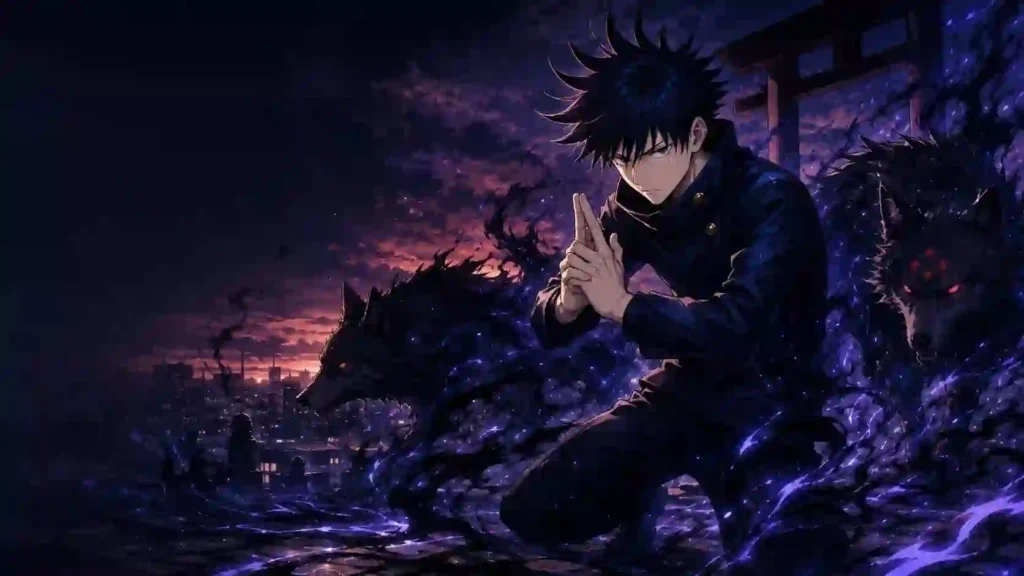
Megumi Fushiguro is a quiet Tokyo Jujutsu High student whose talent is matched by a fierce instinct to protect people he believes deserve a chance. His inherited Ten Shadows Technique gives him unusual options in battle, but his story is about more than summons and power: it is about family, self-worth, and the cost of choosing whom to save. This guide explains his background, abilities, relationships, major plot turns, and final fate—with clear spoiler warnings so readers can choose how far to go.
Quick answer: Who is Megumi Fushiguro?
Megumi is a first-year student at Tokyo Jujutsu High and a Grade 2 jujutsu sorcerer when the anime introduces him. He is the son of Toji Fushiguro, the stepbrother of Tsumiki, and the inheritor of the Zenin clan’s Ten Shadows Technique. He fights by summoning shikigami from shadows and adapting his tactics to the threat in front of him. The official anime character page describes him as a Grade 2 student who entered school with exceptional ability and a personal resolve to protect those he values. Official character profile
| Detail | Answer |
|---|---|
| Full name | Megumi Fushiguro (伏黒 恵) |
| Series | Jujutsu Kaisen (also called JJK) |
| School | Tokyo Jujutsu High |
| Year | First-year student at the story’s start |
| Sorcerer grade | Grade 2 at his introduction |
| Cursed technique | Ten Shadows Technique |
| Domain Expansion | Chimera Shadow Garden; incomplete when first shown |
| Father | Toji Fushiguro |
| Step-sister | Tsumiki Fushiguro |
| Japanese voice actor | Yuma Uchida |
| Core motivation | Protect people he believes deserve to live |
Megumi’s role in Jujutsu Kaisen
In Jujutsu Kaisen, Megumi is one of the central students whose choices shape the story from its opening. He meets Yuji Itadori while investigating a cursed object, and the two become classmates after Yuji enters the dangerous world of jujutsu. Their temperaments make a useful contrast: Yuji tends to act with open emotion, while Megumi assesses risk and looks for a practical opening.
That contrast does not make Megumi cold. He is guarded, serious, and often blunt, but his decisions reveal deep concern for other people. His moral code is personal rather than universal: he does not believe everyone can be saved equally, and he is willing to prioritize those he considers good. That belief explains both his courage and the burden he carries when a rescue fails.
His first appearance establishes him as capable before he is fully understood. He already knows how dangerous curses can be, and he does not treat the job as a game. As the plot expands, readers learn that his reserved manner hides unresolved family history and an immense inherited power.
Personality: quiet, principled, and hard on himself
Megumi rarely seeks attention. He tends to watch, think, and act rather than make speeches. In a fight, that restraint becomes an advantage: he studies an opponent, recognizes what his shikigami can and cannot do, then changes his plan when the first one fails.
His strongest trait is not simply intelligence. It is his willingness to put himself in danger for another person. Early in the story, he can be so focused on the outcome that he discounts his own survival. Gojo challenges this habit, urging him to imagine a stronger version of himself instead of treating his limits as fixed.
Megumi’s growth involves learning that self-sacrifice is not the same as responsibility. He must accept that his life matters too, and that surviving can be part of protecting others. That internal shift is central to why his fights feel like character moments, not just displays of technique.
Family background: Toji, Tsumiki, and the Zenin clan
Megumi is Toji Fushiguro’s son. Toji’s choices have consequences for Megumi long before father and son meaningfully reconnect. Toji makes arrangements tied to the Zenin clan, a powerful sorcerer family that values inherited techniques and status. Gojo later intervenes in Megumi’s future, helping ensure that the boy is not simply absorbed into the clan’s plans.
Tsumiki is Megumi’s step-sister and one of the most important people in his life. Her kindness helps shape his idea of the kind of person worth protecting. When Tsumiki falls into a coma after a curse-related event, Megumi’s desire to find a way to save her becomes a major reason he continues as a sorcerer.
The Zenin connection gives Megumi access to a respected inherited technique, but it also ties him to a family system that treats people as assets. His relationship to the clan is complicated: he has its bloodline and its technique, yet his identity is shaped more by his own choices and bonds than by clan loyalty.
What is the Ten Shadows Technique?
The Ten Shadows Technique is an inherited Zenin clan technique that lets its user summon shikigami through shadows. A shikigami is a supernatural familiar used in combat or support. Megumi forms hand signs to call them, and the shadows themselves become both a medium for summoning and a tactical resource.
The technique rewards creativity. Megumi can use a summon to attack, defend, track, distract, or create an opening for a close-range strike. He can also manipulate shadows in ways that affect his positioning and the tools he carries. The technique does not make every battle easy: each shikigami has limits, and a clever opponent can exploit them.
A key rule is that a newly encountered shikigami must be subdued through a ritual before the user can command it. The process is dangerous, and the Ten Shadows user cannot simply declare mastery. When a shikigami is destroyed, its power may pass on through the technique in a changed form, but the loss affects Megumi’s options. The technique is therefore a system of risk, adaptation, and inheritance rather than a simple menu of unlimited creatures.
Shikigami Megumi uses
The exact roster and appearances develop through the manga. These are among the best-known summons shown in his fighting style:
- Divine Dogs: Tracking and close-combat shikigami. They are among Megumi’s earliest reliable tools.
- Nue: A flying shikigami that can attack from above and use electricity.
- Toad: Useful for restraining or pulling allies out of danger with its long tongue.
- Great Serpent: A large, sudden attacker used to seize or strike a target.
- Max Elephant: A heavy summon that can release a large volume of water, though it consumes significant cursed energy.
- Rabbit Escape: A swarm that creates visual confusion and gives Megumi room to reposition.
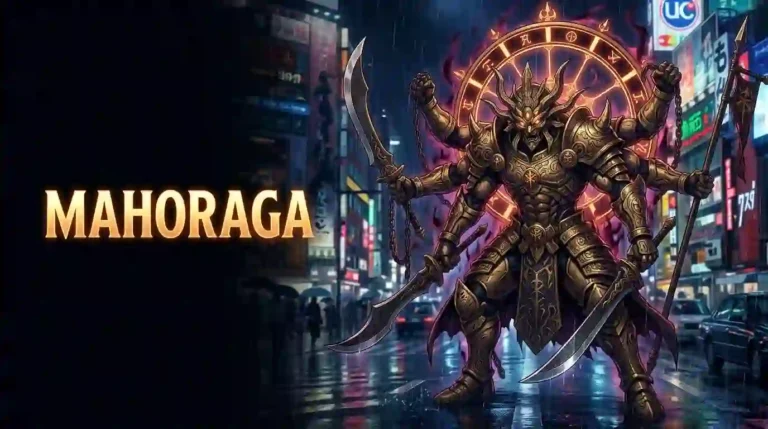
- Mahoraga: The most dangerous and difficult shikigami associated with the technique. Its adaptation ability makes it exceptionally threatening, and summoning it carries grave consequences.
The list is not a promise that every summon remains available in every later fight. The technique’s rules and losses matter, and manga events change what Megumi can call upon.
How Megumi fights: planning, teamwork, and improvisation
Megumi is not a stand-still summoner. He combines shikigami with hand-to-hand combat, weapons, feints, and terrain. He can send one summon to force an opponent to guard, then attack from a different angle himself. If an enemy expects a direct assault, he may use the shadow as a hiding place or bait them into a bad position.
His style works best when he has room to think. Against an opponent with overwhelming speed or power, he may have to make decisions in a split second. That is when his willingness to take a dangerous gamble becomes most visible. He sometimes chooses an extreme option too early, which creates tension between his strategic skill and his low regard for his own safety.
Teamwork also improves his effectiveness. Yuji can draw attention and pressure an opponent physically, while Megumi uses his summons to control space. Their strengths are different but complementary. Their friendship grows through shared danger, not instant agreement: they challenge each other’s instincts and learn to trust each other’s judgment.
Megumi’s Domain Expansion: Chimera Shadow Garden
Megumi’s Domain Expansion is called Chimera Shadow Garden. When he first uses it, the domain is incomplete. Instead of forming a polished, fully enclosed barrier, he spreads shadow through the surrounding space and uses it to multiply his options. Inside the domain, he can create more shikigami and use the environment in unexpected ways.
A Domain Expansion is an advanced jujutsu technique that imposes the user’s innate domain on an area, usually enhancing the user’s technique and making attacks more difficult to evade. Megumi’s early version is not a finished example of that form. Its importance lies in the fact that he manages to create it under pressure, showing how far his potential may reach.
The domain fits his character: it is dangerous, flexible, and unfinished. Rather than winning through a clean, automatic effect, he uses it to overwhelm an opponent with multiple threats and unusual angles. Its incomplete state also leaves room for growth and underscores that talent does not mean mastery.
Why does Sukuna take interest in Megumi?
Sukuna notices Megumi’s technique early in the story. His interest is not based on friendship or concern; he recognizes strategic potential in the Ten Shadows Technique. That attention becomes much more consequential later, when Sukuna seeks a way to take control of Megumi’s body.
The phrase Sukuna in Megumi’s body refers to a major manga development, not a permanent identity change. Sukuna’s possession lets him use Megumi’s body and technique, while Megumi’s own consciousness is suppressed. This gives Sukuna access to a powerful inherited ability and places Megumi in a horrifying position: his body becomes a weapon used against people he cares about.
The story treats possession as a violation with emotional consequences, not a power-up for Megumi. Sukuna’s actions create trauma and loss, and the people around Megumi must find a way to separate the two. When readers search “Sukuna Megumi” or “Megumi Sukuna,” this possession arc is usually what they want explained.
Sukuna and Megumi: what happens in the manga? (Spoilers)
Manga spoilers: Sukuna eventually transfers himself into Megumi’s body, exploiting an opening tied to the binding conditions surrounding Yuji. Sukuna then uses the Ten Shadows Technique, including Mahoraga, in battles that have enormous consequences for the jujutsu world. Megumi is not freely choosing these actions; Sukuna is the one in control.
Sukuna also takes steps intended to weaken Megumi’s ability to resist. The details are painful because Tsumiki’s fate is bound up in the plan. Megumi’s emotional connection to his sister is used against him, pushing him deeper into despair and making it harder for him to fight back from within.
Yuji and the others continue looking for a way to reach Megumi. The conflict is not solved by simply defeating the body Sukuna occupies. They need to make contact with Megumi’s consciousness and give him a reason to respond. That emotional dimension makes the rescue effort distinct from a standard exorcism or duel.
Does Megumi die in Jujutsu Kaisen?
Short answer: No. Megumi does not remain dead; he survives the manga’s final conflict. However, the story places him in extreme danger, and for a period Sukuna controls his body. Readers asking “does Megumi die,” “did Megumi die,” or “does Megumi die in JJK” may be reacting to a dramatic fake-out, his apparent absence from control, or the devastating events involving his sister.
The manga’s ending confirms that Megumi is alive after Sukuna is separated from him. His survival does not make the incident go away. He has lost people, endured a prolonged possession, and must face the aftermath. The conclusion gives him a future, but it does not present that future as an instant return to normal.
So, how did Megumi die? He did not die in the final canon outcome. There are events that make his survival look uncertain, and the stakes are deliberately severe, but the manga ends with him alive. Anime-only viewers should be aware that this answer contains substantial manga spoilers.
What happens to Megumi’s sister, Tsumiki?
Tsumiki is central to Megumi’s motivation, and the answer to “what happened to Megumi’s sister?” is among the story’s most agonizing spoilers. In the Culling Game, the person inhabiting Tsumiki’s body is revealed to be Yorozu, an ancient sorcerer. Megumi’s hope that he can save his sister is shattered when Sukuna uses the situation to deepen Megumi’s despair.
This plot point explains why Megumi’s resistance becomes so difficult. Tsumiki is not just a person he wants to rescue; she represents the moral promise that has guided him since childhood. Losing that hope strips away one of his strongest reasons to fight.
The event also shows how the series uses relationships to shape power struggles. Sukuna does not only overpower Megumi physically. He attacks the emotional foundations that help Megumi keep going. That makes the eventual effort to reach him depend on connection and persistence as much as force.
Yuji and Megumi: friendship under pressure
Yuji and Megumi begin with a tense mission and quickly become close allies. They do not share the same temperament, but both are willing to risk themselves to protect others. Yuji’s instinctive compassion can clash with Megumi’s selective moral code, yet that difference becomes a source of honest conversation rather than a wall between them.
Their bond matters especially during the possession arc. Yuji refuses to reduce Megumi to the body Sukuna controls. He recognizes that Megumi is still there and keeps searching for a way to reach him. This loyalty echoes the way Megumi once chose to help Yuji at the beginning of the story.
For fans searching Yuji and Megumi, the central answer is that they are friends, classmates, and crucial partners. Their relationship is not defined by one grand declaration. It grows through shared missions, disagreements, mutual trust, and the decision to keep showing up when the other person is in danger.
How old is Megumi?
Megumi is a first-year student and a teenager during the main events. Official character material identifies him as a first-year at Tokyo Jujutsu High and a Grade 2 sorcerer, but character ages can shift by arc and are not always repeated in official summaries. For searchers asking how old is Megumi, the safest concise answer is: he is about 15 at the start of the series and around 16 during later school-year events, depending on the point in the timeline.
Be cautious with fan pages that give an exact age without specifying the arc or whether they mean the anime, manga, or a birthday calculation. The official profile is the stronger source for his school year and grade; dates and ages should be checked against the relevant manga timeline before quoting them as exact facts.
Megumi Ogata and Megumi Fushiguro: are they the same person?
No. Megumi Fushiguro is a fictional character in Jujutsu Kaisen. Megumi Ogata is a Japanese voice actor and singer, best known among anime viewers for other roles. The similar given name can confuse search results, but Ogata does not voice Megumi Fushiguro in the TV anime.
The official Jujutsu Kaisen cast page lists Yuma Uchida as the Japanese voice of Fushiguro. Official staff and cast page Fans looking for “Megumi Ogata” are likely searching for the performer by name, while searches for “Megumi Fushiguro voice actor” point to Uchida.
Is “Sukuna x Megumi” canon?
Searches for Sukuna x Megumi can refer to fan ships, edits, or fan art. In the canon story, Sukuna’s relationship with Megumi is antagonistic and involves possession and coercion. The manga does not portray them as a romantic couple. It is useful to separate fan-created interpretations from what the original story depicts.
Fans may create art or alternate-universe stories for many reasons, but those works should not be confused with canon. A clear label such as “fan art,” “fanfiction,” or “non-canon” helps readers understand what they are viewing. In the source story, Sukuna’s control of Megumi is an act of violence, not romance.
Why is Megumi Fushiguro so popular?
Megumi appeals to viewers who enjoy thoughtful fighters, complicated family histories, and characters whose strength comes with real limits. His design is instantly recognizable, but his appeal is not only visual. He makes hard choices, gets things wrong, and has to confront the damage caused by his own assumptions about sacrifice.
His technique also invites discussion. Ten Shadows creates tactical possibilities, while Mahoraga and Chimera Shadow Garden prompt questions about the technique’s ceiling. Fans can debate how Megumi might have developed if circumstances had been different, but those theories should be labeled as speculation rather than confirmed canon.
The emotional center matters just as much. His bond with Tsumiki, his friendship with Yuji, and his complicated link to Gojo each reveal a different side of him. Together, those relationships make a reserved character feel layered without requiring him to explain every feeling aloud.
Megumi pfp: choosing a profile picture
A Megumi pfp is a profile picture featuring the character. Fans often choose an image from the anime, a manga panel, official promotional art, or original fan art. Before using one, check whether the artist permits reposting or profile use, credit them where requested, and avoid presenting fan art as official artwork.
For a recognizable look, fans often choose his spiky dark hair, school uniform, a Divine Dog scene, or a shadow-themed composition. For a spoiler-safe profile, pick an early-series image and avoid later manga panels. If you use an image commercially, review the relevant rights and platform rules rather than assuming that a publicly visible image is free to reuse.
Anime versus manga: where should new viewers start?
The anime introduces Megumi’s personality, early shikigami, and foundational relationships with strong action and voice performance. The manga continues beyond the currently adapted story and contains the major possession and ending spoilers described above. Readers who want the complete answer to questions about his fate need to follow the manga through its conclusion.
The official anime website provides character information and cast details, while the publisher’s official manga platform is the appropriate place to read the licensed chapters. Avoid relying on isolated social posts for major plot claims: short clips often remove the context that explains who is in control, what a technique can do, or whether a scene is a flashback.
Suggested spoiler-safe reading approach
- Watch the anime from the beginning if you want the story’s intended introduction.
- Decide whether you want manga spoilers before searching character names alongside words such as “death,” “ending,” or “Sukuna.”
- If continuing in print or digital, use the official publisher’s chapter listings for the correct order.
- Treat fan theories and unofficial summaries as interpretation, not primary canon.
What Megumi represents in the story
Megumi’s arc asks whether a person can define their own worth when their family, technique, and enemies all try to define it for them. The Zenin clan sees inherited power. Sukuna sees a useful body and technique. Megumi himself often sees a person whose job is to protect others, even at the cost of his life.
The story gradually challenges that narrow self-image. His survival matters not because he has a rare technique, but because he is a person with bonds and a future. His choices still carry responsibility, but responsibility does not require him to erase himself.
That tension is why Megumi’s story remains compelling even in scenes where he is not winning. His most meaningful struggle is not simply learning to summon stronger shikigami. It is holding on to an identity that others try to take from him.
Frequently asked questions about Megumi Fushiguro
Does Megumi die in Jujutsu Kaisen?
No. He survives the manga’s final conflict. He is placed in grave danger and Sukuna possesses his body, but Megumi is alive at the end. This is a manga spoiler.
What is Megumi’s Domain Expansion?
It is Chimera Shadow Garden. The version he first displays is incomplete and uses shadows to multiply his shikigami and attack options.
What is Megumi’s cursed technique?
He inherits the Ten Shadows Technique, which lets him summon shikigami through shadows. Its power depends on skill, cursed energy, and the risks involved in taming each summon.
Who is Megumi’s sister?
Tsumiki Fushiguro is his step-sister and one of the people he most wants to protect. Her condition and fate become major manga spoilers during the Culling Game.
How old is Megumi Fushiguro?
He is about 15 at the start and around 16 in later early-series events. Exact age depends on the point in the timeline, so check the specific arc when publishing a precise figure.
Does Megumi summon Mahoraga whenever he wants?
No. Mahoraga is exceptionally dangerous and must be subdued under the Ten Shadows ritual rules. Summoning it is a high-risk move, not a routine attack Megumi can safely use at will.
Conclusion: Look beyond the shadows
Megumi Fushiguro stands out because his technique and his choices are inseparable. Ten Shadows gives him extraordinary tactical range, but his defining struggle is learning that protecting others should not mean treating his own life as disposable. His family history, friendship with Yuji, and confrontation with Sukuna all test that belief in different ways.