What Is BL Manhwa? The Complete Guide to Korean Boys’ Love Comics
A clear, jargon-free guide to Korean Boys’ Love webtoons — what they are, where to read them legally, which titles deserve your time, and how to stay safe while reading.
Searching for a good boys’ love story means dodging pirate sites, broken chapter lists, and spoilers hiding in every thumbnail. One wrong tap can expose you to explicit scenes you never agreed to see, and unofficial uploads pay artists nothing. This guide explains exactly what BL manhwa is, where to read it legally, which titles fit your taste, and how ratings work — so you can start a story you will love tonight.
What Is BL Manhwa?
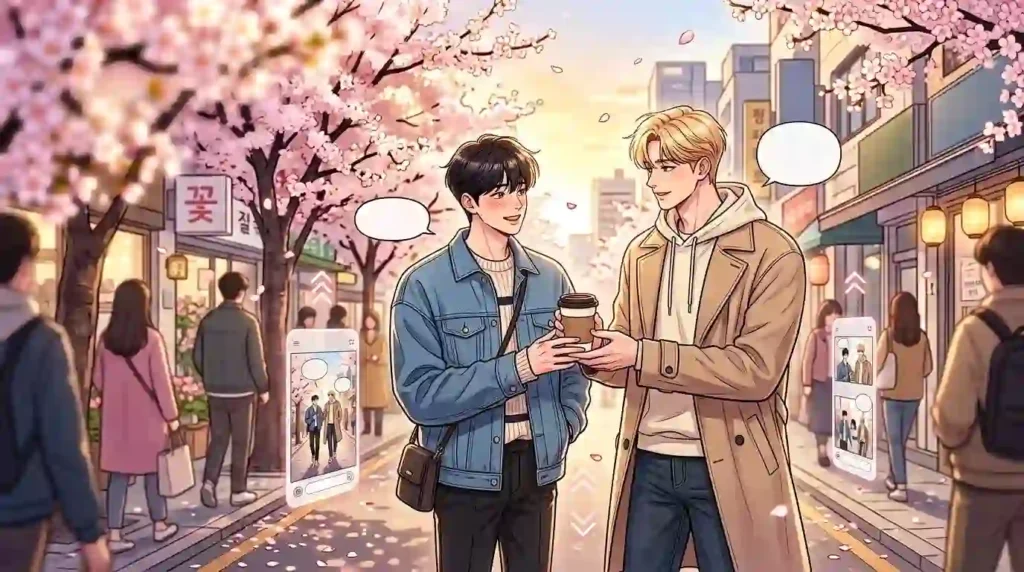
BL manhwa is the name readers use for Korean comics — published as full-color webtoons — that center on romance and emotional relationships between male characters. The letters BL stand for Boys’ Love, a category name the Korean comic industry adopted from Japan and made entirely its own. The word manhwa (만화) simply means Korean comics, whether they appear in print or on a phone screen.
Almost every modern title reaches readers as a vertical-scroll webtoon. Episodes unlock on a weekly schedule in full color, optimized for thumb-scrolling on a smartphone. A single series can run for dozens of episodes across multiple seasons, so finishing one feels a little like finishing a whole season of television.
The genre covers a wide emotional range. On the gentle end, you will find sunlit campus stories, office crushes, and quiet domestic dramas. On the mature end, you will find explicit 19-plus romances, vampire fantasies, and dark psychological thrillers. Age gates on each listing tell you exactly what to expect before you tap.
It helps to know what BL is not. These comics are fictional entertainment created by a wide range of writers and artists, and the majority of working BL creators in Korea are women. A romance comic is not a documentary about real gay life, and readers who want authentic LGBTQ memoir or realism should look for queer-manhwa and nonfiction labels as well.
A Short History of Korean Boys’ Love Comics
Korean readers discovered boys’ love through Japanese yaoi magazines and fan translations in the 1990s and early 2000s. Early Korean creators posted their own stories on bulletin boards, fan cafés, and small print-circulation fairs. The audience was passionate but niche, and almost no major publisher would touch the genre.
That changed with the smartphone. When Korean portals shifted comics from printed pages to vertical-scroll webtoons around 2009 to 2013, romance became one of the fastest-growing categories on every platform. In 2013, Lezhin Comics launched as a paid webtoon service and gave adult romance creators a legitimate storefront for the first time. Mature BL series became one of its signature categories.
A breakout hit accelerated everything. Killing Stalking, a dark thriller by the artist Koogi, won Lezhin’s first global comic contest and its 100-million-won grand prize in 2015, then attracted international press attention and a wave of fan translations. Suddenly, BL manhwa was no longer a hidden category. Readers outside Korea began searching for Korean titles by name, and platforms started investing in official English translations.
Industry data shows why platforms kept investing. The Korea Creative Content Agency (KOCCA), a government body that tracks the domestic content business, reports that Korea’s webtoon industry has grown past 1.5 trillion won in annual sales, with digital comics ranking among Korea’s fastest-growing cultural exports. BL series ride that same wave, powered by loyal readers who return every week for new episodes.
By the early 2020s, the genre crossed into mainstream Korean entertainment. Semantic Error, a hit campus romance, became a live-action streaming series in 2022 and won fan awards across Asia. Today, the BL manhwa market supports full-time artists, printed art books, voice dramas, merchandise lines, and a steady pipeline of screen adaptations.
Manhwa vs. Manga vs. Manhua: What Sets Korean BL Apart
New readers often see three similar words and wonder where a story actually comes from. The distinction is simple once you match the word to its country:
- Manhwa (만화) = Korean comics, read on webtoon platforms in full-color vertical scroll.
- Manga (まんが) = Japanese comics, traditionally printed in black-and-white pages read right to left.
- Manhua (漫画) = Chinese comics, ranging from full-color web releases to print; romantic Chinese web-novel adaptations are often called danmei.
A BL manhwa is built for a phone screen from the first panel. Artists use long vertical gutters, cinematic camera angles, and color grading — cool blues for tension, warm gold for softness — to control pacing as a reader scrolls. Japanese BL manga such as Given or Classmates tends to use fixed page layouts designed for a printed book, then gets reformatted for screens later.
Release rhythm differs too. Korean webtoons run weekly episodes, often 50 to 80 scrolls long, with mid-season breaks and a clear “season one, season two” structure. Japanese manga runs in monthly or weekly magazines and later collects into paperback volumes. Chinese danmei manhua often adapts completed web novels, which means seasons can pause while artists catch up to the source material.
Tone varies as well. Korean BL leans heavily into slow-burn emotional buildup, stylish fashion, and cliffhanger season finales. Readers around the world say the glossy, high-production art is one of the first things that hooks them.
Where to Read BL Manhwa Legally
Official platforms cost little — often just a few dollars per series — and they fund the artists directly. These are the main legal storefronts with English libraries:
- Lezhin Comics — the deepest catalog of Korean BL, especially mature 19-plus titles and completed series. It uses a coin system plus wait-until-free episodes, so patient readers can unlock many chapters at no cost.
- Manta — a flat-fee subscription app with a growing romance and BL shelf. One monthly payment unlocks its whole library, which makes it easy for binge readers.
- Tappytoon — licensed Korean webtoons with timed-free unlocks and a strong romance section, including several fan-favorite BL dramas.
- Tapas — operates on an ink-and-coin model and carries select mature romance under age-gated categories.
- WEBTOON — the largest English-language webtoon portal, free with ad support and Daily Pass unlocks for completed series; its romance and drama shelves include queer and boys’ love titles.
- Bomtoon and Ridi — Korean-language storefronts for readers who want brand-new episodes the moment they launch in Korea.
Reading on an official app gives you three things pirate sites cannot: professional translations that respect the artists’ dialogue, secure payment and account recovery, and money flowing back to the creator. Most platforms also offer 3 to 10 free opening episodes, so you can test art and chemistry before paying.
A practical tip: create a single account with one email and use the official app, not a browser redirect. Purchased episodes stay tied to your account across phone upgrades, and apps send notifications when a subscribed series returns from hiatus.
12 Popular BL Manhwa Titles to Start With Today
The table below covers the series readers mention most, sorted from gentle entry points to darker mature reads. Ratings follow platform age gates; individual episodes sometimes carry extra content notes, so always check the listing.
| # | Title | Creator | Main Platform | Setting & Trope | Age Gate | Best For |
|---|---|---|---|---|---|---|
| 1 | Semantic Error | Jeo Soo-ri (story), Angy Kim (art) | Ridi novel / Lezhin webtoon | Campus, enemies-to-lovers, coding partners | 15+ | First-time BL readers; live-action fans |
| 2 | Here U Are | D. Jun | Lezhin Comics | University, freshman and student council guide | 15+ | A completed, warm slow burn |
| 3 | Cherry Blossoms After Winter | Bamwoo | Bomtoon / Lezhin | Childhood friends, found family, domestic life | 15+ | Cozy comfort reading; drama adaptation |
| 4 | The New Employee | Moscareto (novel), Zec (art) | Ridi / Lezhin | Office romance, rookie and mentor | 15+ | Workplace romance fans |
| 5 | Love is an Illusion | Fargo | Lezhin Comics | Omegaverse romantic comedy | 19+ | Trope-driven humor and banter |
| 6 | A Guy Like You | Waje | Lezhin Comics | Campus with a supernatural dream twist | 19+ | Short, twisty completed binges |
| 7 | Blood Bank | Silb | Lezhin Comics | Vampire fantasy, captive-and-clerk dynamic | 19+ | Completed dark fantasy romance |
| 8 | Under the Green Light | Nx | Lezhin Comics | Art student, sculptor, criminal underworld | 19+ | Cinematic art and crime mood |
| 9 | The Pizza Delivery Man and the Gold Palace | Aien | Lezhin Comics | Slice-of-life rescue romance, class gap | 19+ | Emotional, grounded modern stories |
| 10 | The Pawn’s Revenge | Evy | Lezhin Comics | Crime thriller, hitman and witness | 19+ | Tension, action, moral gray areas |
| 11 | Painter of the Night | Byeonduck | Lezhin Comics | Joseon-era historical, scholar and painter | 19+ | Lush art and slow-burn historical drama |
| 12 | Killing Stalking | Koogi | Lezhin Comics | Psychological horror thriller | 19+ | Award-winning suspense; never a light read |
If you want one guaranteed gentle start, open Semantic Error. The premise — a rigid computer-science student and a campus design star clash over a group project — is easy to follow, the episodes are short, and the payoff earned its live-action adaptation.
If you prefer completed stories, Here U Are and Blood Bank both deliver full, finished runs with no waiting between seasons. Finished series are perfect for weekend binges because the entire emotional arc lands without hiatus gaps.
If you love historical settings, Painter of the Night is the title readers talk about most. Its painterly art and tense Joseon-era power dynamics built one of the most devoted audiences in the category, though the 19-plus rating reflects genuinely heavy content.
If you want thrills rather than sweetness, Killing Stalking belongs in your queue. Treat it as psychological horror first and romance second, read the content warnings, and never use it as a newcomer’s first taste of the genre.
BL Manhwa Tropes and Genres, Explained
BL manhwa creators reuse a set of story shapes because readers love watching them done well. Knowing the vocabulary helps you pick a series that matches your mood.
- Enemies to lovers — rivals, roommates, or project partners start hostile and melt into care. Semantic Error is the textbook example.
- Sunbae and hoobae — Korean senior-and-junior relationships set at university or work, built on duty, favor-trading, and shifting power balance.
- Childhood friends — long-buried affection resurfaces after years apart. Expect cohabitation, shared meals, and gentle domestic pacing.
- Office and showbiz romance — rookies, idols, actors, and producers navigate public pressure alongside private longing.
- Historical romance — set in the Joseon era or fantasy kingdoms, with painterly costumes, strict social ranks, and forbidden attachments.
- Crime and underworld stories — mafia families, hitmen, and golden towers create high-stakes tension and morally complicated leads.
- Paranormal and fantasy — vampires, ghosts, and reincarnation cycles; Blood Bank anchors the vampire shelf.
- Omegaverse — a borrowed alternate-world system with social dynamics called alpha, beta, and omega, used for both comedy and drama. Start with Love is an Illusion if the trope sounds fun.
- Reverse comforts — stories where an emotionally guarded character is slowly healed by steady kindness, often paired with class-gap or service-worker leads.
Most series blend two or three of these. A historical crime romance and a campus omegaverse comedy both exist, and the genre rewards creators who mix familiar shapes with fresh dialogue.
Age Ratings and Content Warnings: Read Safely
Korean platforms gate episodes with clear age ratings, usually 15-plus for romance with mild mature content and 19-plus for explicit sex, graphic violence, or dark psychological themes. Lezhin, Bomtoon, and Ridi require age verification before mature chapters unlock.
Take those labels seriously. Dark thriller titles explore stalking, abuse, coercion, and trauma as horror material, not as relationship goals. Creators and platforms add episode-level content warning cards when a chapter contains intense scenes, and skipping those warnings can turn an evening of comfort reading into genuine distress.
Three habits keep your reading safe:
- Check the rating tag on the series description before your first free episode.
- Read the first few comments, which often flag heavy content without plot spoilers.
- Keep 19-plus titles behind the app’s mature-content filter if you share a device with younger family members.
For readers under 18, the 15-plus catalog already offers hundreds of completed romances — campus stories, workplace comedies, and gentle fantasies — with no reason to seek adult-rated material.
How a BL Manhwa Gets Made
Readers often ask how a single artist produces a full-color episode every single week. The pipeline is more structured than it looks.
- The pitch. A creator, called a jakga (작가) in Korean, submits a synopsis, character sheets, and sample episodes to a platform contest or editor. Lezhin’s open contests and challenge boards launched several hit artists.
- The script and storyboard. The writer breaks each episode into small beats, ending on a cliffhanger strong enough to pull readers back in seven days.
- Art production. Most teams include the lead artist plus assistants handling line art, flat color, shading, and backgrounds. Larger studios sometimes take on background painting.
- Platform review and rating. Editors check pacing and translation, and the platform assigns the age gate and content tags.
- Weekly serialization. Episodes release on a fixed day. Fans call this a “comeback day,” and series trend on social media within hours of a new upload.
- Paid unlocks and creator earnings. After the free opening episodes, readers spend coins or subscription access; sales directly fund the artist and determine whether a series gets another season.
- Season breaks and physical releases. Between seasons, artists rest and collect episodes into printed books, often with unreleased bonus chapters, postcards, and character interviews.
Understanding the pipeline also explains why hiatuses happen. Full-color weekly production is physically exhausting, and artist health delays are common. Following the creator’s official social accounts keeps you informed far better than unofficial re-upload pages.
From Scroll to Screen: BL K-Drama Adaptations
Korean studios now treat popular BL webtoons as proven blueprints for live-action drama, because an existing comic arrives with an audience, a plotted story, and visual references for casting and cinematography.
The breakthrough came in 2022 with Semantic Error. The Watcha adaptation cast singer-actors Park Seo-ham and Park Jae-chan as bickering students, ran as short binge-length episodes, and then returned as a theatrical film cut. It trended across East Asia and introduced millions of drama fans to the source comic.
Two more adaptations widened the door the same year. The New Employee turned the office romance between a nervous rookie and his polished mentor into a workplace miniseries, while Cherry Blossoms After Winter adapted the childhood-friends domestic story for streaming. The wave continued with web-novel-derived productions such as Our Dating Sim and Love Class, proving the audience for queer romance on Korean television was far larger than networks once assumed.
For comic readers, adaptations create a satisfying loop: watch the show for the actors’ chemistry, then return to the webtoon for the internal monologues and uncensored emotional beats a 20-minute episode cannot fit.
How to Find New Boys’ Love Comics You Will Actually Love
Algorithms tend to show the same five famous titles forever, so finding fresh favorites takes a small system.
- Start completed, then go weekly. Finishing one completed series teaches you your taste before you commit to a two-year weekly wait.
- Filter by tag, not just by ranking. Platform tags such as “historical,” “omegaverse,” “campus,” and “thriller” surface hidden gems buried below the chart.
- Read three free episodes before judging. Webtoon openings often spend the first episode on setup; chemistry usually ignites by episode two or three.
- Follow the artist, not just the series. Fans of one creator’s timing and humor usually enjoy their next work.
- Track titles on community catalogs. Reader databases such as Anime-Planet and Goodreads list completion status, age ratings, and legal platform links, which keeps you off spammy aggregator pages.
- Watch adaptation announcements. A drama deal often puts the original comic on sale, which is the cheapest moment to binge.
Keeping a simple reading list — even a notes-app list of titles, tags, and moods — prevents the “dozens of open tabs, nothing to read” problem that every webtoon fan knows.
Free vs. Paid: Why Paying Protects the Stories You Love
Every legal platform mixes free and paid reading. New readers usually get 3 to 10 free episodes, platforms release wait-until-free chapters on timers, and subscriptions like Manta remove the coin-counting entirely. Paid episodes typically cost a few cents each after bundle discounts.
Pirate sites appear to offer the same content for free, but the bill comes due in other ways. They inject intrusive ads and malware, mistranslate mature and consent-related dialogue, strip creator notes, and vanish mid-series after copyright takedowns. Artists have publicly shared how stolen traffic cut their season renewal odds, because platforms measure success by official sales.
Paying changes the math in your favor. Coin purchases and subscriptions decide which artists can afford assistants, which series earn another season, and which titles get English translation at all. Even wait-until-free reading on an official app counts, because the ad revenue attached to those unlocks still reaches the creator.
A Quick Glossary of Korean BL and Webtoon Terms
- BL / Boys’ Love — romance stories focused on male-male relationships; the standard industry label today.
- Yaoi and shounen-ai — older Japanese terms; yaoi implied explicit content and shounen-ai softer romance. Korean platforms prefer BL.
- Webtoon — the Korean term for digital, vertical-scroll comics, read top to bottom on a phone.
- Episode — one weekly release, equivalent to a chapter, usually built as one long scroll.
- Season — a block of episodes separated by a hiatus, like a television season.
- Wait-until-free — a platform model where older episodes unlock for free after a timer.
- Coins, ink, and points — platform currencies used to unlock paid episodes.
- Sunbae / hoobae — senior / junior in school or company hierarchy, a common relationship setup.
- Omegaverse — an alternate-world trope using alpha, beta, and omega social roles.
- HEA — happy ever after, a shorthand readers use in reviews.
- Scanlation — fan-made translations, usually unlicensed; official apps now translate most major titles professionally.
- Jakga-nim — a polite Korean fan term for an artist-writer, roughly “dear creator.”
BL Manhwa FAQ: Six Questions Readers Ask Most
What does BL mean in manhwa?
BL means Boys’ Love. In manhwa, it labels Korean full-color webtoons built around romance between male characters, ranging from sweet 15-plus campus stories to explicit 19-plus dramas. Every official platform lists the age rating on the series page.
What is the difference between BL manhwa, BL manga, and BL manhua?
The country of origin decides the name. BL manhwa comes from Korea as a color vertical webtoon, BL manga comes from Japan in traditional page layout, and BL manhua comes from China, often as a danmei novel adaptation. The romance category is the same; the art format and release schedule differ.
Are these titles safe for younger teens?
Some are, and many are not. Titles rated 15-plus are created for older teens, while 19-plus series contain explicit sex or graphic violence and require age verification. Readers under 18 should stay inside the platform’s teen-rated filter.
Where can I read BL manhwa legally in English?
Lezhin Comics offers the largest Korean BL catalog, Manta provides all-you-can-read subscription access, and Tappytoon, Tapas, and WEBTOON carry licensed titles too. Free opening episodes and wait-until-free unlocks let you sample most series before spending money.
Which title should a complete beginner read first?
Start with Semantic Error for a fast, funny campus romance with a completed webtoon and a live-action drama to watch afterward. If you want something warmer and fully finished, Here U Are is the safest second pick. Save the 19-plus thrillers until you know the genre.
Why are chapters called episodes, and what is a season break?
Korean webtoons release one self-contained weekly “episode” designed like a television installment. A season break is the planned hiatus between blocks of episodes, used for artist rest and printed-book production. Your app notifies you when the series returns.
Pick Your First Title Tonight
You now have everything a scattered Google search never gave you: a clear definition, a safe legal platform, a twelve-title table sorted by mood, and honest content warnings. The fastest way to understand the BL manhwa format is to feel it on your own phone — the vertical scroll, the color grading, the weekly cliffhanger.
Here is your five-minute move: install Lezhin Comics or Manta, open Semantic Error or Here U Are, and read the three free episodes tonight. If it clicks, add two more titles from the table that match your favorite trope.
Then come back and tell the next reader. Drop a comment with the first title you finished, the trope you cannot resist, or a hidden gem the table missed. Your recommendation might be the exact story someone else has been searching for — and every read on an official platform is a vote for the artist who made it.