Kigachiakuta: The Complete Guide to Lore, Characters, and Dark Fantasy Worldbuilding
Finding reliable, organized details about the sprawling dark fantasy universe of Kigachiakuta often leaves readers sifting through scattered forum threads and incomplete wikis. Missing vital lore connections or misunderstanding the power system ruins the excitement of following Rudo’s revenge journey. This complete pillar guide solves that confusion by mapping every character, vital instrument, and world rule into one authoritative, easy-to-read resource.
What Is the Core Story and Premise of Kigachiakuta?
Kigachiakuta is a gripping dark fantasy shonen series created by Kei Urana, featuring graffiti art designs by Hideyoshi Andou. The narrative follows Rudo, a young boy living in the slums of a wealthy, floating sky city where the upper class discards both trash and unwanted people into a toxic abyss known as the Pit. Falsely accused of murdering his adoptive father Regto, Rudo gets sentenced to death and thrown straight into the hazardous wasteland below.
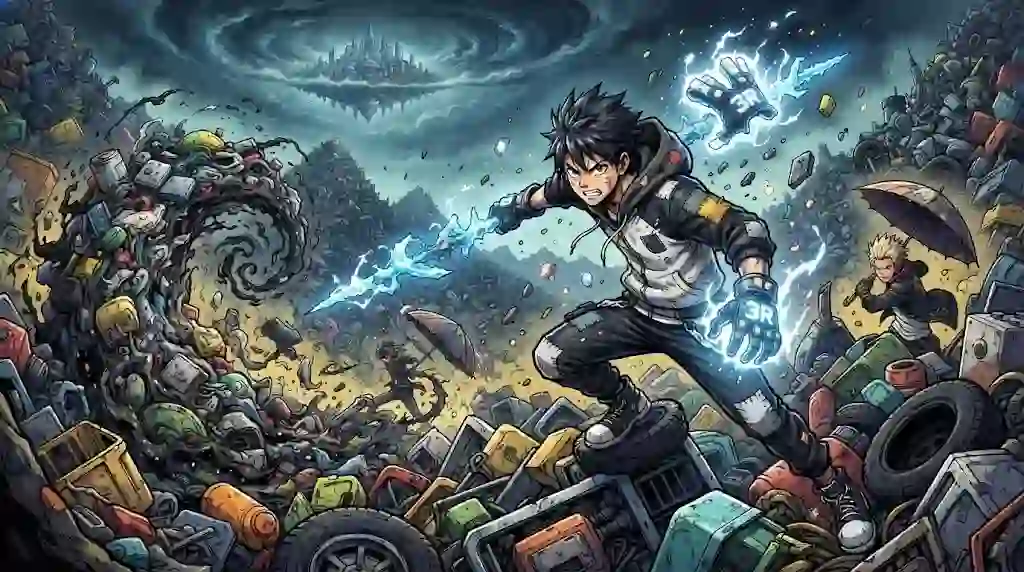
Rather than dying upon impact, Rudo awakens in a nightmarish landscape filled with massive, aggressive monsters formed entirely from discarded garbage. Driven by pure rage against the corrupt society that betrayed him, Rudo discovers he possesses a rare supernatural talent to awaken the hidden souls inside discarded objects. He joins an elite organization of warriors called the Cleaners to survive the wasteland, hunt trash beasts, and find a way back to the sky city for vengeance.
The core themes of Kigachiakuta revolve around environmental waste, class inequality, and finding genuine value in things society abandons. Every broken tool or discarded toy holds emotional weight, transforming the act of caring for belongings into a literal source of combat power. This emotional foundation separates the series from standard battle manga by rewarding empathy and preservation rather than mindless destruction.
How Does the World Structure of Kigachiakuta Work?
The setting of Kigachiakuta divides humanity into two drastically different vertical realms separated by an impenetrable atmospheric barrier called the Border. Understanding this geographic split explains the social tension, economic exploitation, and ecological horror driving the entire plot.
- The Sphere (The Sky City): A pristine, technologically advanced metropolis suspended high above the earth. Wealthy elites enjoy clean air and luxury while viewing the lower slums as a disposable labor force.
- The Slums (Tribesfolk Territory): Located on the outer edges of the Sphere, this impoverished zone houses descendants of criminals and outcasts. Residents face constant discrimination and strict surveillance from the Apostles, the city’s ruthless police force.
- The Border: A lethal, turbulent cloud layer separating the Sphere from the surface world. Passing through this barrier without specialized protection usually results in instant death, making escape from the Pit nearly impossible.
- The Ground (The Abyss or Pit): The ruined, polluted surface of the earth buried under centuries of sky-city garbage. Toxic air forces inhabitants to wear specialized gas masks in dangerous zones while navigating shifting mountains of scrap.
- Polluted Zones: Extreme hazard areas on the Ground where concentrated toxicity spawns giant, mutated trash beasts that threaten nearby human settlements.
Life on the Ground relies on salvaging functional technology from the trash dropped by the Sphere. Settlements survive by building walls, purifying air, and hiring professional fighters to clear out encroaching monsters before they destroy entire towns.
Who Are the Main Characters in Kigachiakuta?
The cast of Kigachiakuta features distinct personalities shaped by trauma, survival, and fierce loyalty. Each major character brings specialized combat skills and unique philosophical views on the world’s broken class system.
Rudo Surebrec
Rudo serves as the fierce, hot-headed protagonist of Kigachiakuta who grew up scavenging high-value trash in the Sphere’s slums. His hands bear severe burn scars that force him to wear protective gloves gifted by his adoptive father, Regto. After surviving his fall into the Pit, Rudo channels his intense hatred for the sky elites into combat, displaying an unprecedented ability to draw out maximum power from multiple different objects.
Enjin
Enjin acts as Rudo’s laid-back mentor and one of the top-ranking members of the Cleaners organization. Sporting spiky blonde hair and a carefree attitude, Enjin masks sharp tactical intelligence beneath casual humor and street smarts. He rescues Rudo from his first trash beast encounter and recognizes the boy’s rare potential as a Giver, immediately recruiting him into Team Akuta.
Zanka Nijiku
Zanka is a disciplined, proud warrior within the Cleaners who takes immense pride in his rigorous martial arts training. Born into an elite warrior family on the Ground, Zanka initially resents Rudo’s raw, untrained talent because he had to work tirelessly for every ounce of his own skill. Over time, Zanka becomes Rudo’s closest rival and reliable combat partner, balancing Rudo’s reckless impulses with calculated precision.
Riyo Reaper
Riyo is an energetic, agile Cleaner known for her bright red hair, acrobatic fighting style, and mysterious past as a trained assassin. She fights using oversized scissors and relies on blinding speed to slice through massive enemies before they can react. Despite her cheerful, playful demeanor around teammates, Riyo displays cold, ruthless efficiency whenever someone threatens her friends.
Regto
Regto was Rudo’s kind-hearted adoptive father in the Sphere who raised the boy and taught him to cherish broken items. He gifted Rudo the iconic pair of gloves that later become the focal point of the boy’s supernatural abilities. Regto’s brutal murder by a mysterious masked intruder sets the entire revenge narrative of Kigachiakuta into motion.
Jabber Wonger
Jabber stands out as one of the primary antagonists belonging to the Raiders, a dangerous criminal syndicate operating on the Ground. Obsessed with pain and thrilling combat, Jabber uses poison-tipped rings as his primary weapon and delights in fighting strong opponents to the brink of death. His erratic behavior and lethal toxins make him a recurring nightmare for Rudo and the Cleaners.
What Is the Power System in Kigachiakuta?
The combat system in Kigachiakuta centers on spiritual energy called Anima and the individuals capable of channeling it into physical items. Unlike magic systems based on inherited bloodlines alone, this power requires deep emotional attachment and consistent care for a specific object.
Givers (Anima Users)
Givers are rare humans capable of infusing their personal life energy, known as Anima, into an inanimate object. When a Giver pours genuine affection, maintenance, and focus into a single item over many years, that item awakens a soul and transforms into a powerful weapon. Only a small percentage of the population possesses the spiritual sensitivity required to become a Giver.
Vital Instruments (Jinki)
A Vital Instrument, referred to as a Jinki, is an everyday object that has evolved into a supernatural weapon through a Giver’s Anima. Because every person values different things, Vital Instruments take wildly diverse forms, ranging from umbrellas and scissors to cleaning sticks and pacifiers. When activated, a Jinki changes shape, grows dramatically in size, and gains unique magical properties tied to the item’s original purpose.
Rudo’s Unique Ability (3R)
While standard Givers bond with a single Vital Instrument over decades, Rudo breaks every known rule of the power system through his gloves, the Watchman Series item named 3R. Rudo can infuse Anima into any discarded object he touches, temporarily transforming worthless trash into a devastating Vital Instrument. The catch is that the object completely disintegrates into dust once its peak energy is spent, forcing Rudo to constantly adapt his fighting style to whatever scrap lies nearby.
Supporters
Supporters are non-Giver members of the Cleaners who play an essential tactical role during dangerous missions. Lacking the ability to awaken Vital Instruments, Supporters use specialized firearms, traps, communication gear, and defensive shields to protect Givers while they charge their attacks. Their strategic coordination keeps frontline fighters alive inside lethal polluted zones.
Comprehensive Breakdown of Kigachiakuta Characters and Vital Instruments
| Character Name | Affiliation | Vital Instrument (Jinki) | Base Object | Primary Combat Ability |
| Rudo Surebrec | Cleaners (Team Akuta) | 3R (Watchman Series) | Leather Gloves | Awakens maximum power in any discarded trash item temporarily. |
| Enjin | Cleaners (Team Akuta) | Umbreaker | Umbrella | Transforms into a giant drill-like lance for high-speed piercing strikes. |
| Zanka Nijiku | Cleaners (Team Akuta) | Lovely Assistaff | Wooden Staff | Enhances martial arts reach, strikes, and defensive deflection. |
| Riyo Reaper | Cleaners (Team Akuta) | The Ripper | Barber Scissors | Expands into giant blades capable of slicing massive trash beasts. |
| Semiu Grier | Cleaners (Receptionist) | Eyes | Glasses | Grants ultra-fast visual perception and predicts enemy movements. |
| Gris Rubion | Cleaners (Supporter) | None (Supporter) | Tactical Gear | Provides heavy physical defense, combat support, and field logistics. |
| Jabber Wonger | Raiders | Mankira | Poison Rings | Grows monstrous claws coated in fast-acting paralytic and lethal toxins. |
| Zodyl Typhon | Raiders (Leader) | Mishmash | Trench Coat | Absorbs properties of consumed matter to mutate and attack enemies. |
What Are the Major Factions in Kigachiakuta?
Power struggles on the Ground revolve around organized groups competing for resources, territory, and control over the mysterious Watchman Series artifacts. Each faction operates under strict internal rules and distinct ideological goals.
- The Cleaners: A professional organization dedicated to protecting Ground settlements from trash beasts and researching the mysteries of the Abyss. Divided into specialized squads like Team Akuta, the Cleaners recruit talented Givers and Supporters to maintain order in chaotic regions.
- The Raiders: A ruthless group of rogue Givers led by the enigmatic Zodyl Typhon. Unlike the Cleaners who protect civilians, the Raiders actively experiment with trash beasts, hunt down Watchman Series items, and seek to weaponize the Abyss against the Sphere.
- The Apostles: The militarized police force serving the upper-class government of the Sphere. Equipped with advanced sky-city technology, they enforce strict segregation between elites and Tribesfolk while executing criminals by casting them into the Pit.
- The Watchman Series Holders: Not a formal organization, but a scattered network of individuals possessing rare, ancient artifacts bearing the Watchman emblem. These items hold immense, unstable power capable of crossing the Border safely.
Who Are the Creative Minds Behind Kigachiakuta?
The distinct visual identity and gritty atmosphere of Kigachiakuta stem from a unique creative partnership between two specialized artists. Their combined expertise gives the series a raw, street-art aesthetic rarely seen in mainstream fantasy manga.
Kei Urana (Story and Main Artwork)
Kei Urana serves as the primary author and illustrator of Kigachiakuta, bringing dynamic facial expressions, intense action choreography, and deep emotional storytelling to every chapter. Before launching her own serialization in Kodansha’s Weekly Shonen Magazine in February 2022, Urana worked as a key assistant to Atsushi Ohkubo, the acclaimed creator of Soul Eater and Fire Force. Ohkubo publicly praised Urana as his successor, highlighting her masterful command of dark, expressive linework.
Hideyoshi Andou (Graffiti Design)
Hideyoshi Andou collaborates directly with Kei Urana as the series’ dedicated graffiti designer. Rather than treating background art as secondary decoration, Andou creates authentic street murals, tags, and typographic emblems integrated directly into the architecture and title pages of Kigachiakuta. This genuine urban art style reinforces the story’s counter-culture themes and gives the wasteland environments unmistakable personality.
What Makes the Art Style and Themes of Kigachiakuta Unique?
Kigachiakuta stands apart from contemporary dark fantasy series through its deliberate fusion of punk-rock aesthetics, sharp angular character designs, and heavy ink shadows. Kei Urana uses exaggerated perspective and thick, textured brush strokes to make trash beasts look genuinely grotesque and overwhelming. Characters wear layered, patched streetwear, heavy boots, and industrial accessories that reflect a scavenger culture built on repurposing discarded materials.
Beyond visual style, the narrative delivers a sharp critique of modern consumer culture and disposable mindsets. In Kigachiakuta, throwing away something useful without gratitude creates literal monsters. By tying combat strength directly to long-term care and respect for belongings, the story turns an everyday habit into a moral compass. Readers connect with Rudo’s journey because his anger stems from genuine injustice, while his growth requires learning to trust allies and value life on the Ground.
What Is the Official Anime Adaptation Status for Kigachiakuta?
The global popularity of Kigachiakuta led to the official announcement of a television anime adaptation produced by Studio Bones, the renowned animation studio behind My Hero Academia, Fullmetal Alchemist: Brotherhood, and Mob Psycho 100. Studio Bones brings world-class action animation expertise ideally suited for translating Kei Urana’s kinetic battle sequences and Hideyoshi Andou’s vibrant graffiti art onto the screen.
Directed by Fumihiko Suganuma with series composition by Hiroshi Seko and character designs by Satoshi Ishino, the anime adaptation captures the gritty textures and high-contrast lighting of the manga. Hiroshi Seko’s involvement as scriptwriter—known for his work on Jujutsu Kaisen, Chainsaw Man, and Attack on Titan—ensures tight pacing and faithful adaptation of Rudo’s emotional arc. Fans can watch the series through major international streaming platforms carrying licensed Kodansha anime titles.
How Should New Readers Start Experiencing Kigachiakuta?
Jumping into Kigachiakuta requires no prior knowledge of other franchises, making it completely accessible for newcomers to dark fantasy manga. Following a clear reading order ensures you catch every piece of foreshadowing planted in the opening chapters.
- Start with Volume 1 (Chapters 1 to 4): Focus closely on Rudo’s daily life in the Sphere, his relationship with Regto, and the exact details surrounding the masked killer. Every object shown in Regto’s home carries significance later in the plot.
- Pay Attention to the Watchman Symbol: Look for a specific circular emblem appearing on Rudo’s gloves and certain mysterious artifacts. Tracking this symbol reveals the hidden history connecting the Sphere and the Ground.
- Read the Official Kodansha English Translation: Printed volumes and digital chapters from Kodansha USA provide accurate terminology for Vital Instruments, Givers, and polluted zone classifications, avoiding confusing fan-translation inconsistencies.
- Explore the Bonus Art Pages: Check the end-of-chapter sketches and volume extras featuring Hideyoshi Andou’s graffiti designs, which often contain subtle clues about faction alliances and character motivations.
Frequently Asked Questions About Kigachiakuta
What does the title Kigachiakuta mean?
The title combines Japanese words referencing “hungry” or “starving” alongside “akuta,” which translates directly to “garbage,” “rubbish,” or “worthless scum.” Together, the title reflects both the literal wasteland of discarded trash and the starving ambition of outcasts fighting to survive in a world that threw them away.
Is Kigachiakuta connected to Soul Eater or Fire Force?
Kigachiakuta takes place in an entirely separate universe and has no direct plot connection to Soul Eater or Fire Force. However, creator Kei Urana worked as Atsushi Ohkubo’s assistant on Fire Force, which explains the shared stylistic influences in expressive character faces, bold linework, and dark humor.
Where can I read the Kigachiakuta manga legally?
You can read Kigachiakuta legally through Kodansha’s official digital manga platform, K MANGA, or by purchasing physical and digital collected volumes released by Kodansha USA in major bookstores and online retailers.
How many Vital Instruments can Rudo use at once?
Through his Watchman Series gloves called 3R, Rudo can activate up to three separate discarded objects simultaneously as Vital Instruments. Once an object reaches its full output, it crumbles away, requiring him to find new scrap items to continue fighting.
Why do characters wear masks in the Ground?
Many areas on the Ground suffer from severe air pollution caused by centuries of toxic waste falling from the Sphere. Outside protected towns, breathing unfiltered air in Polluted Zones causes rapid organ failure and fatal poisoning, making gas masks mandatory survival gear for Cleaners.
Who is the main villain in Kigachiakuta?
The Raiders, led by Zodyl Typhon, act as the primary antagonistic faction opposing the Cleaners on the Ground. Simultaneously, the corrupt ruling class of the Sphere and the mysterious figure who murdered Regto serve as overarching targets of Rudo’s personal quest for justice.
Start Your Journey Into the World of Kigachiakuta Today
Kigachiakuta delivers one of the freshest dark fantasy experiences in modern shonen storytelling by blending visceral action, punk street-art aesthetics, and a deeply human message about finding worth in what others discard. Whether you pick up the first volume of Kei Urana’s manga or dive into Studio Bones’ dynamic anime adaptation, Rudo’s fight from the bottom of the Abyss to the heights of the Sphere promises unforgettable twists and relentless momentum. Grab Volume 1 today, pay close attention to every discarded item in the background, and join the community unraveling the secrets of the Watchman Series.